A new poll shows that readers of The Epoch Times overwhelmingly support making the Department of Government Efficiency (DOGE) a permanent fixture of federal reform—even after the departure of its high-profile point man, Elon Musk—while warning that America’s most ambitious cost-cutting effort in decades risks being undone without congressional action.
With DOGE set to dissolve on July 4, 2026, unless Congress acts, readers expressed deep concern that without legislation, the reforms Musk spearheaded could be undone. DOGE’s current tally of $180 billion in estimated savings comes from a range of actions, including contract cancellations, fraud elimination, asset sales, and workforce reductions.
Legitimacy, Tradeoffs, and Trust
For many, the appeal of DOGE seems to lie not just in its aggressive cost-cutting, but that it could represent a real step toward lasting federal reform. That hope, however, is tempered by the reality that change not codified by Congress remains vulnerable to reversal under a future administration.
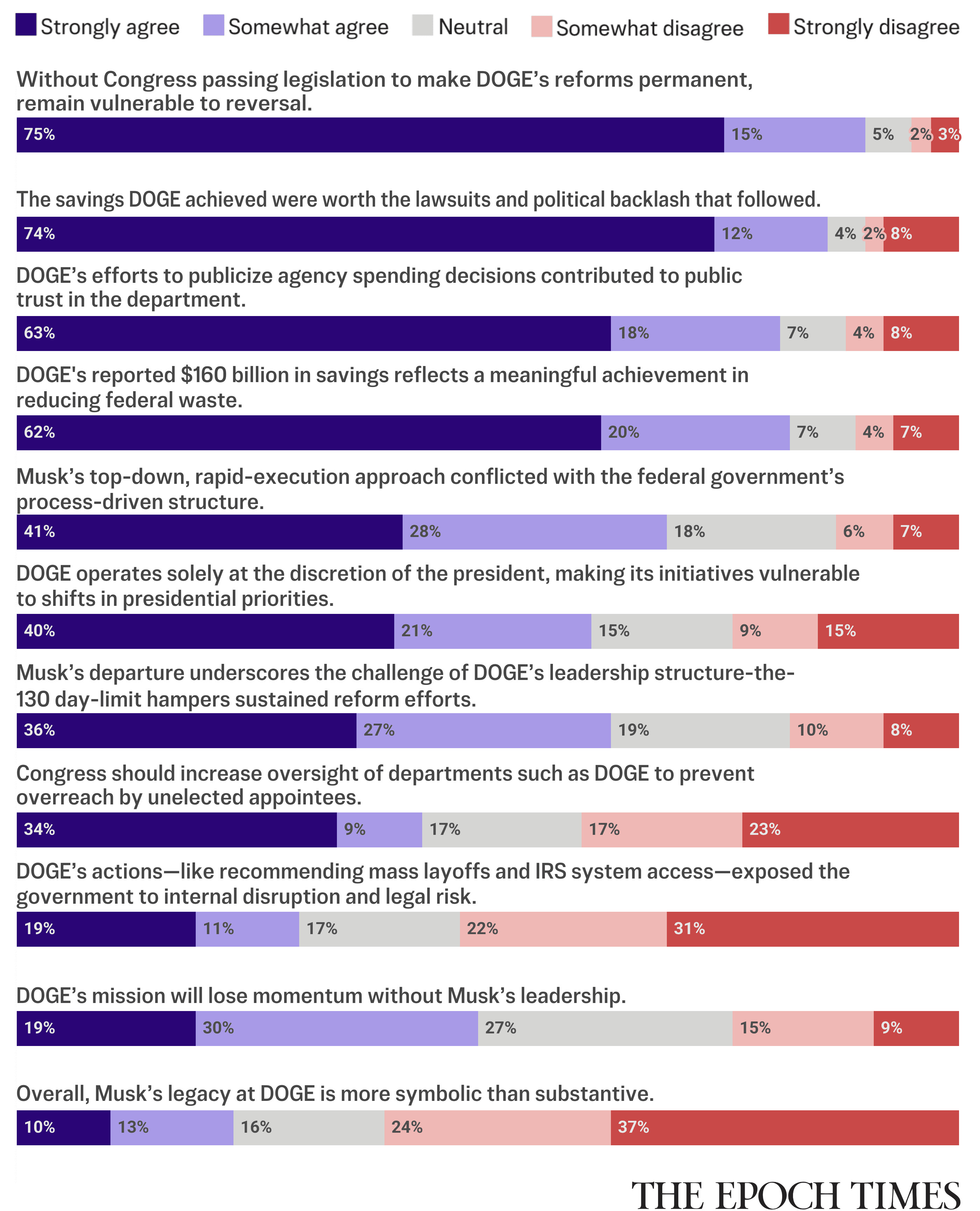
A decisive 90 percent of poll respondents said legislative action is needed to cement DOGE’s achievements. With nearly all of that support expressed in strong terms, it seems clear readers see congressional follow-through as essential to safeguarding the progress made so far. Just five percent disagreed, reflecting near-universal concern that the gains DOGE has made could be undone without statutory backing.Still, concern about the potential future undoing of DOGE reforms did not diminish appreciation for their impact thus far. Even amid lawsuits, protests, and political backlash, 86 percent of respondents said the reforms were worth the controversy, including nearly three-quarters who strongly agreed. Ten percent disagreed, suggesting that a small but vocal segment sees the tradeoffs as too high.
Yet confidence in DOGE remains strong. Thousands of reader write-ins expressed admiration for the agency’s willingness to push through controversy in the pursuit of long-overdue reform.

Achievements, Structure, and Musk’s Exit
With billions in reported savings and no shortage of controversy, DOGE has become one of the most visible government reform initiatives in recent history.
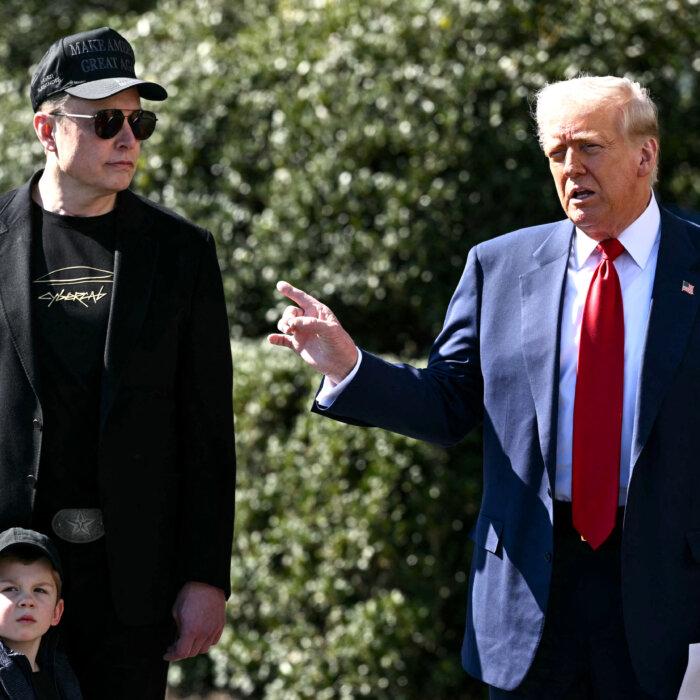
More than 80 percent of respondents said DOGE’s $160 billion in savings—a figure that has since grown to $180 billion—represents a meaningful accomplishment. With 62 percent strongly agreeing, the scale of the cuts appears to reinforce readers’ belief in the department’s mission, even as its $2 trillion target remains a long way off. Just 11 percent disagreed, while 7 percent were neutral.
Still, respondents noted that the effort is on a precarious footing. DOGE is not a formal executive department but an advisory body embedded in the U.S. Digital Service, established by executive order and dependent on presidential discretion. Codifying its reforms or establishing DOGE as a permanent department would require legislation, a tall order given partisan gridlock in Congress.
Sixty-nine percent of respondents saw DOGE’s future as uncertain, given that its future hinges on who sits in the Oval Office. With fewer than 15 percent disagreeing, the results reflect widespread concern that DOGE’s fate is politically vulnerable.
Reader views were more mixed over Musk’s leadership style, which has been described as embodying the Silicon Valley mantra to “move fast and break things,” a phrase signaling that disruptive change often requires bypassing standard norms. That ethos stands in contrast with the federal government’s process-driven structure, designed for continuity and stability.
A majority of respondents—61 percent—agreed that Musk’s leadership style clashed with federal norms. Yet 24 percent disagreed, and 15 percent were neutral, reflecting a more divided assessment on whether his disruptive approach was problematic or a necessary jolt to drive reform.
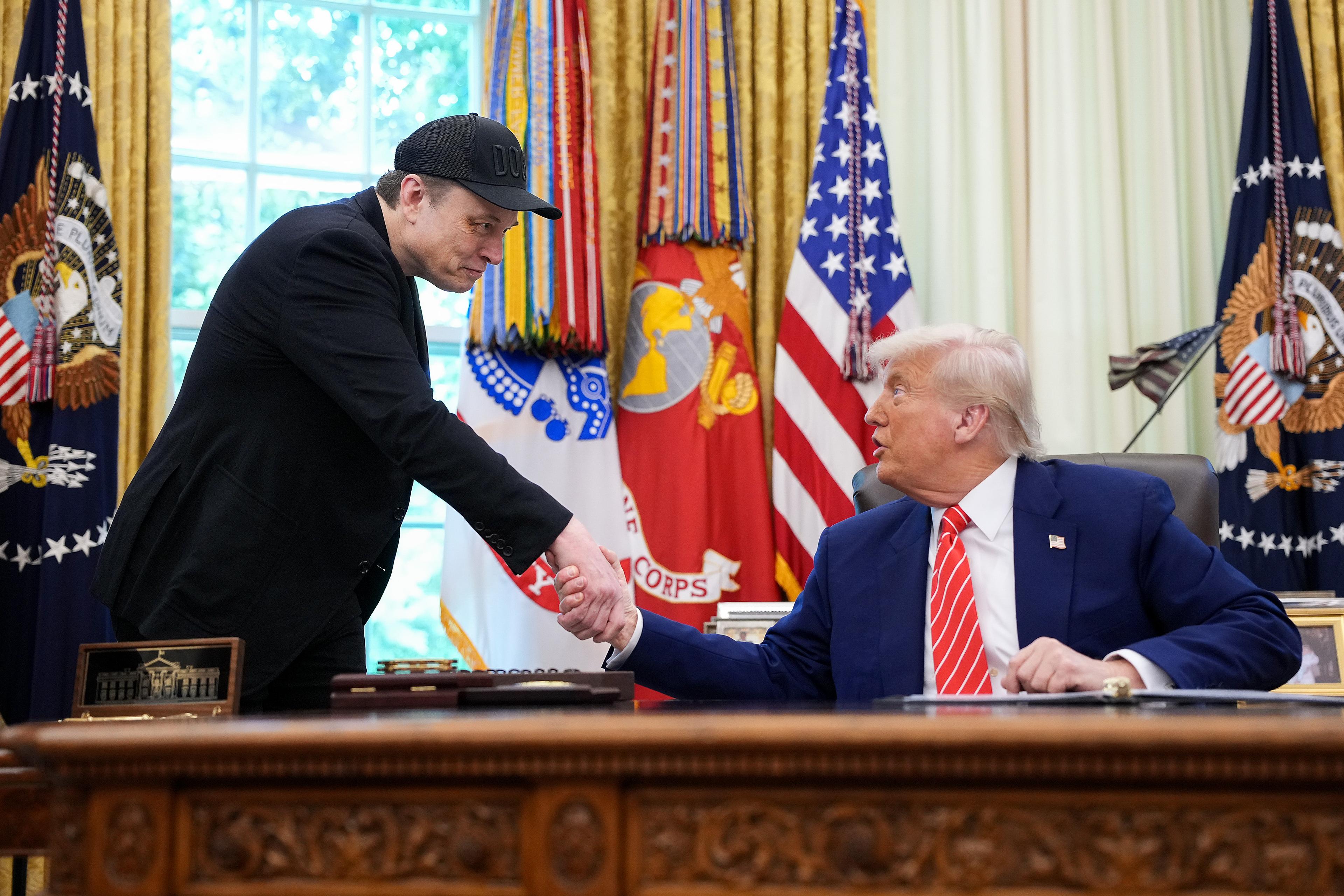
Another source of concern was DOGE’s leadership structure. Musk’s exit coincided with the expiration of his 130-day term under federal rules governing special government employees. That term limit has become a point of debate, with 63 percent of readers saying it hampers long-term reform. While nearly one in five were neutral and 18 percent opposed, the data show many readers see leadership continuity as key to sustaining DOGE’s efforts.
Oversight, Risk, and Musk’s Legacy
DOGE’s rise to prominence as a waste-reducing government reform initiative has sparked not just political clashes but deeper questions about accountability and the limits of executive power.Forty-three percent of readers say Congress should increase its oversight of departments like DOGE to prevent overreach by unelected appointees, while 40 percent oppose the idea. That near-even split marks this as the most divided question in the poll.
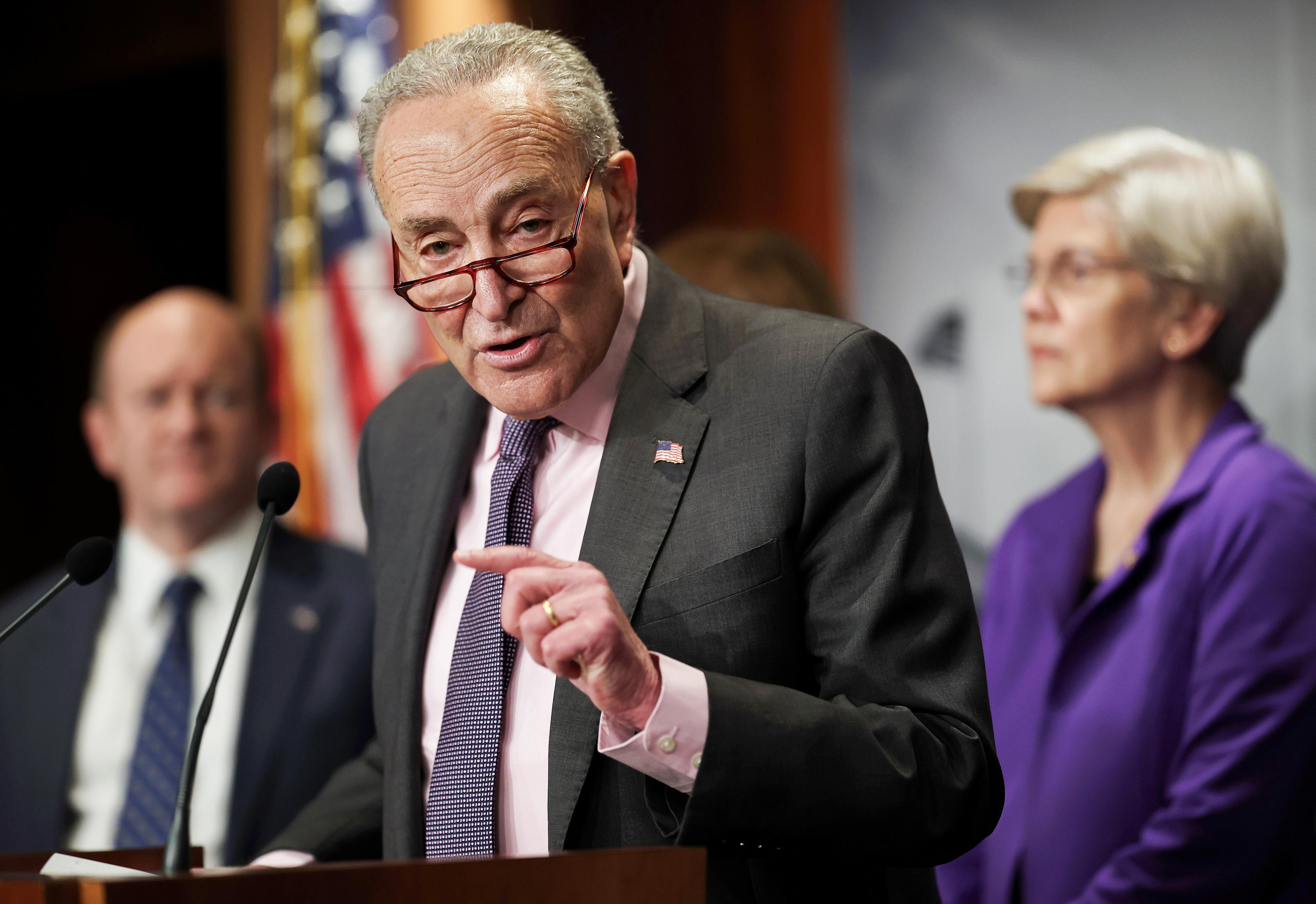
Supporters argue that DOGE is implementing the will of voters who backed Trump’s pledge to overhaul the government. Critics—including Senate Majority Leader Chuck Schumer (D-N.Y.)—have called the agency an “unelected shadow government” engaged in a “hostile takeover.” Musk has dismissed such claims, asserting that DOGE is confronting a bureaucracy that itself holds massive, unelected power and is more immune to reform than any elected official.
Despite these concerns, most readers did not view DOGE’s actions as reckless. Asked whether its more aggressive moves—like recommending mass layoffs or accessing IRS systems—posed legal or operational risk, 53 percent said no, while 30 percent expressed concern. Seventeen percent were neutral, suggesting general confidence in DOGE’s judgment.
Uncertainty was more pronounced when readers considered DOGE’s future without Musk. Forty-nine percent said the agency would lose momentum without him, while 24 percent disagreed and 27 percent were undecided—highlighting how closely readers associate the reform effort with its original architect, even if DOGE continues under White House and cabinet leadership.
Asked to assess Musk’s overall legacy, most respondents rejected the notion that it was merely symbolic. Sixty-one percent disagreed with the idea that his impact was mostly performative, including 37 percent who strongly disagreed. Only 23 percent saw his role as mostly symbolic, while 16 percent remained neutral, suggesting that for most readers, Musk’s time at DOGE produces real change, not just headlines.
Spending, Not Just Waste, Is the Real Problem
In an open-ended question, readers were invited to weigh in on whether DOGE could truly succeed in reducing government waste—and why. From over 4,000 responses, a dominant theme emerged: the real issue isn’t just waste—it’s runaway spending.Many readers expressed admiration for DOGE’s reforms but argued that the agency’s biggest obstacle isn’t bureaucratic inertia—it’s Congress. Lawmakers were frequently described as addicted to spending, beholden to special interests, and unwilling to make the tough choices needed for fiscal restraint. Some noted that despite decades of promises to eliminate waste, Congress has rarely followed through.
A recurring point was that DOGE has no enforcement power. It can recommend reforms, but unless Congress passes them into law, future administrations can simply reverse them, making lasting change an elusive goal.
Another common frustration was the concept of “forever funding.” Respondents described a culture in which once a program is created, it rarely—if ever—gets dismantled, regardless of whether it’s effective or necessary.
Amid that frustration, Trump’s name came up repeatedly. Many credited him for driving DOGE’s mission forward and giving it the political force to confront runaway spending. Even respondents who were skeptical of lasting reforms conceded that, under Trump, DOGE at least has a fighting chance to make a dent in Washington’s spending machine.
The overall message from readers is clear—government waste is an obvious problem, but unchecked spending is the root cause. And without congressional action, even DOGE’s boldest reforms may prove fleeting.