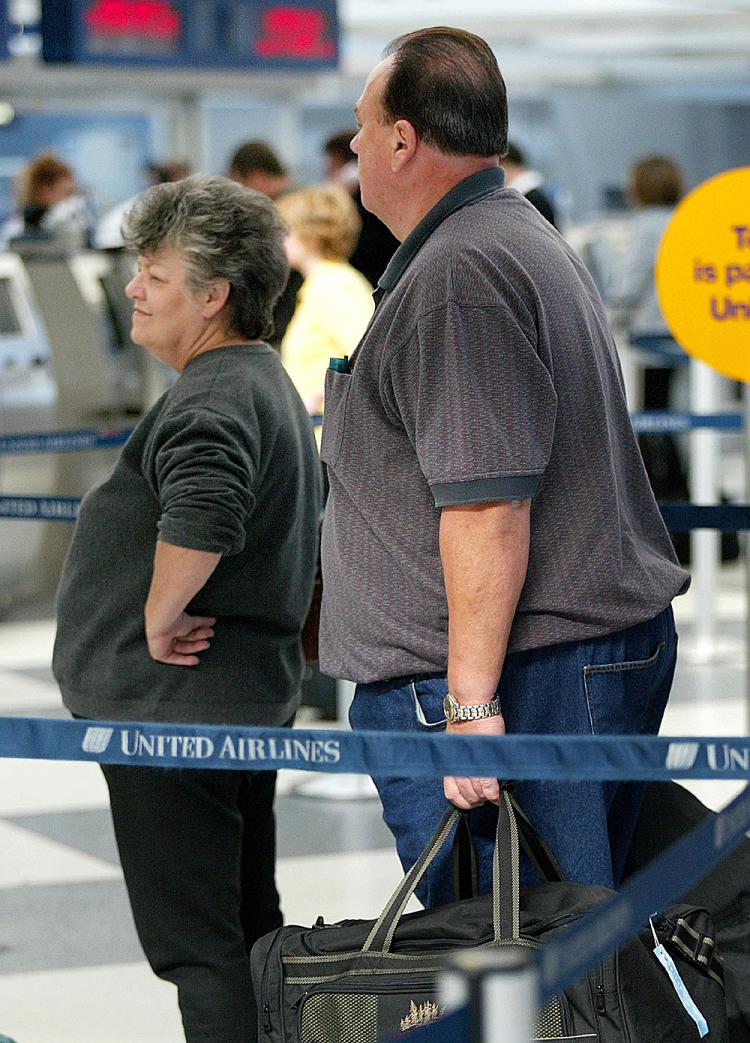
The world-first decision was released Thursday, leaving airlines obligated to provide, at no extra charge, an extra seat to passengers who are functionally disabled by obesity. Airlines must also provide an extra seat to a severely disabled person who needs to be accompanied by an attendant, or needs extra room for a wheelchair.
The regulation applies only to domestic flights in Canada.
The Canadian Transportation Agency (CTA) adopted the “One-Person-One-Fare” regulation last January 10 and gave Canada’s three major airlines one year to comply.
Airlines sought to appeal the regulation twice, but neither Canada’s Federal, nor Supreme Court would listen to the case.
Response from Airlines
Peter Fitzpatrick, a spokesperson for Air Canada, Canada’s largest airline, said the company would comply with the decision. The regulation takes effect January 9, 2009.
“We have already commenced procedures to implement this decision (this involves determining eligibility, and programming our systems and designing training for our employees),” he wrote in an e-mailed response.
Westjet spokesperson Richard Bartrem said that airline would also comply and is looking into how to implement the regulation in a way that is “fair and respectful.” He said Westjet is working with the CTA for clear guidelines as to when an obese passenger counts as “functionally disabled.”
“This is unprecedented in the airline industry in the world,” he said about the regulation.
Response to the decision has been mixed, according to blogged responses on news Web sites. Comments have ranged from praising the decision as an act of compassion to criticizing it as granting unfair privileges to people with irresponsible eating habits. Others suggested that the cost of an extra seat for an attendant should be paid for by public healthcare.
Marc Comeau, a spokesperson for the CTA, said the agency passed the regulation after careful consideration. Comeau said there is no blanket policy on what counts as “functionally disabled by obesity.” He also said that complaints by people who were charged an extra fare will be looked at on a case-by-case basis. Some complaints have already been dismissed, he said, because although the person was obese, they were not disabled.
CTA estimates the one-person-one-fare policy will cost Air Canada, which operates two of the three airlines affected, 0.09 per cent of their $8.2 billion annual passenger revenue and will cost WestJet, the third airline, 0.16 per cent of their $1.4 billion passenger revenue annually.