A report out today reveals that the Catholic Church and the British government colluded to cover up the involvement of a Catholic priest in the killing of nine people in the village of Claudy in County Derry, Northern Ireland, in 1972.
Four Catholics and five Protestants, aged from 8 to 65, died directly or due to injuries from three car bombs; 30 others were injured. No group claimed responsibility for the bombs and no warnings had been given.
The Police Ombudsman’s investigation, launched in 2002, looked into the diaries of bishops and the internal correspondence of senior members of the Royal Ulster Constabulary (RUC) to see how they dealt with suspicions about Fr James Chesney.
`Police Ombudsman Mr Hutchinson said in the report that the decisions made by those in the Statement must be considered in the context of the time.
“I accept that 1972 was one of the worst years of the Troubles and that the arrest of a priest might well have aggravated the security situation,” he wrote.
“Equally, I consider that the police failure to investigate someone they suspected of involvement in acts of terrorism could, in itself, have had serious consequences.
“In the absence of explanation the actions of the senior RUC officers, in seeking and accepting the Government’s assistance in dealing with the problem of Father Chesney’s alleged wrongdoing, was by definition a collusive act.
“However,” he said, “collusion may or may not involve criminality. My role in this matter as Police Ombudsman is to investigate police criminality or misconduct.
“The key police decision makers referred to in this Statement are deceased. Had they been alive today their actions would have demanded explanation which would have been the subject of further investigation.”
As regards Church and State officials, Mr Hutchinson said he found no evidence of criminal intent on the part of any Government Minister or official or on the part of any official of the Catholic Church.
He went on, “The morality or ‘rightness’ of the decision taken by the Government and the Catholic Church in agreeing to the RUC request is another matter entirely and requires further public debate. Placing this information in the public domain in a transparent manner enables that debate to take place.”
He continued, “I am satisfied that the same situation would not be repeated today. Rigorous procedural laws, checks and balances, media scrutiny and offices such as that of the Police Ombudsman would ensure that similar actions could not occur without proper accountability.”
The explosions happened on the day the British army launched Operation Motorman to remove barricades from so-called republican no-go areas in the city of Derry, 11 miles away.
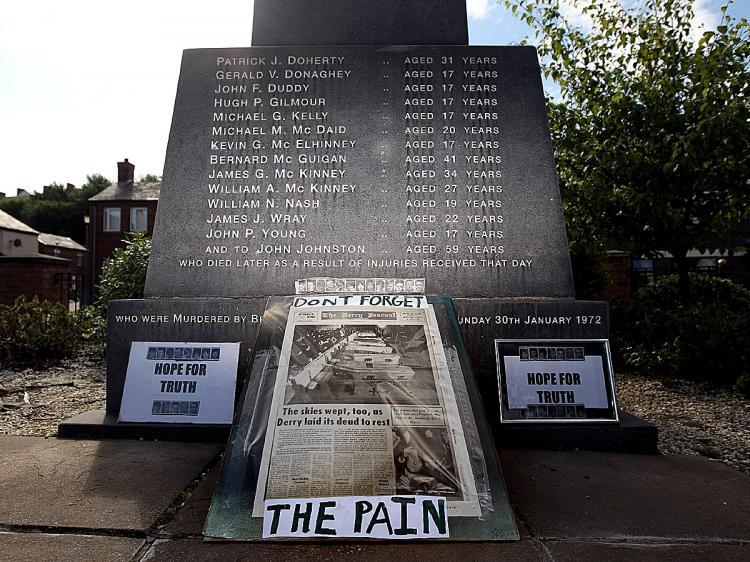
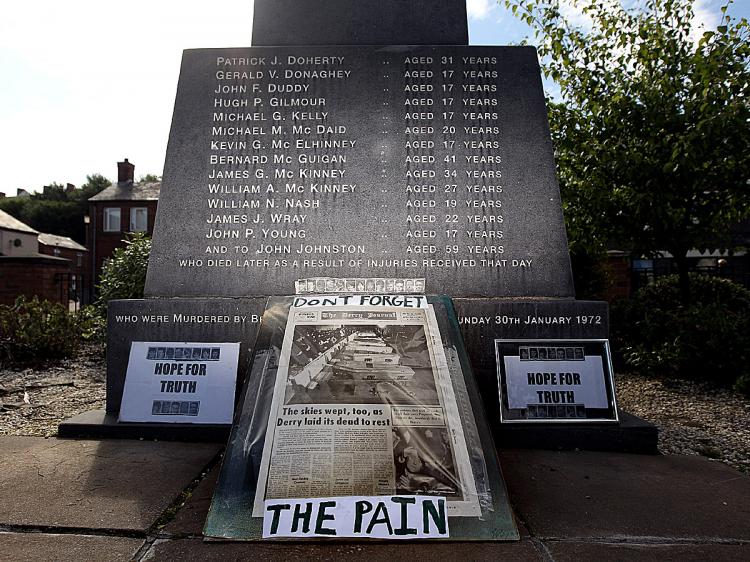
Six months earlier in Derry, then called Londonderry, British soldiers killed thirteen people and injured thirteen in the Bloody Sunday Massacre.
After the longest and most expensive inquiry in UK history, in June this year British Prime Minister James Cameron apologized on behalf of the nation for the unlawful killings on Bloody Sunday.
Four Catholics and five Protestants, aged from 8 to 65, died directly or due to injuries from three car bombs; 30 others were injured. No group claimed responsibility for the bombs and no warnings had been given.
The Police Ombudsman’s investigation, launched in 2002, looked into the diaries of bishops and the internal correspondence of senior members of the Royal Ulster Constabulary (RUC) to see how they dealt with suspicions about Fr James Chesney.
`Police Ombudsman Mr Hutchinson said in the report that the decisions made by those in the Statement must be considered in the context of the time.
“I accept that 1972 was one of the worst years of the Troubles and that the arrest of a priest might well have aggravated the security situation,” he wrote.
“Equally, I consider that the police failure to investigate someone they suspected of involvement in acts of terrorism could, in itself, have had serious consequences.
“In the absence of explanation the actions of the senior RUC officers, in seeking and accepting the Government’s assistance in dealing with the problem of Father Chesney’s alleged wrongdoing, was by definition a collusive act.
“However,” he said, “collusion may or may not involve criminality. My role in this matter as Police Ombudsman is to investigate police criminality or misconduct.
“The key police decision makers referred to in this Statement are deceased. Had they been alive today their actions would have demanded explanation which would have been the subject of further investigation.”
As regards Church and State officials, Mr Hutchinson said he found no evidence of criminal intent on the part of any Government Minister or official or on the part of any official of the Catholic Church.
He went on, “The morality or ‘rightness’ of the decision taken by the Government and the Catholic Church in agreeing to the RUC request is another matter entirely and requires further public debate. Placing this information in the public domain in a transparent manner enables that debate to take place.”
He continued, “I am satisfied that the same situation would not be repeated today. Rigorous procedural laws, checks and balances, media scrutiny and offices such as that of the Police Ombudsman would ensure that similar actions could not occur without proper accountability.”
The explosions happened on the day the British army launched Operation Motorman to remove barricades from so-called republican no-go areas in the city of Derry, 11 miles away.
Six months earlier in Derry, then called Londonderry, British soldiers killed thirteen people and injured thirteen in the Bloody Sunday Massacre.
After the longest and most expensive inquiry in UK history, in June this year British Prime Minister James Cameron apologized on behalf of the nation for the unlawful killings on Bloody Sunday.