


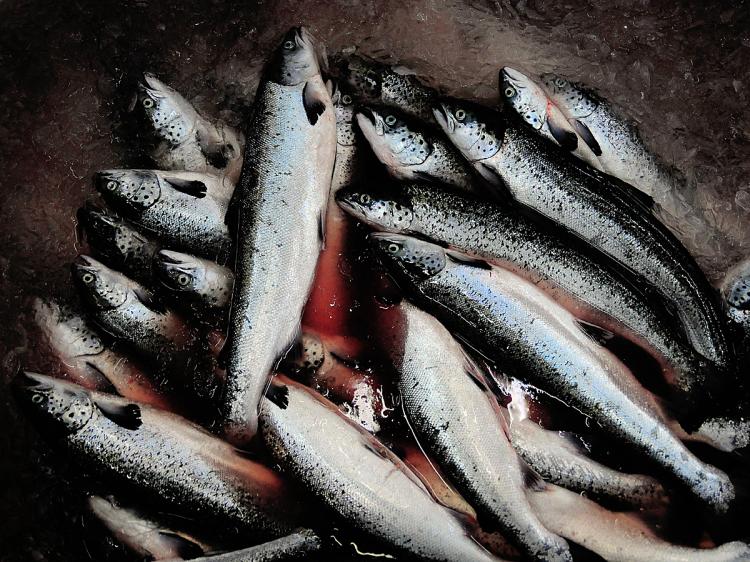
A controversial fast-growing genetically engineered salmon developed in Canada has been named one of the 50 best inventions of 2010 in the online version of Time Magazine.
U.S. biotech company AquaBounty Technologies Inc.’s GE salmon—dubbed “Frankenfish” by environmentalists—could soon be approved for sale in the U.S.
AquaBounty plans to produce the GE salmon eggs at its facility on Prince Edward Island, then ship them to Panama to be grown and processed in controlled facilities.
The company is currently seeking approval from the Food and Drug Administration (FDA) to sell the salmon in the U.S. If it gets the green light, the salmon, called AquAdvantage, will be the first GE animal ever approved for human consumption.
AquaBounty engineered Atlantic salmon to grow faster by inserting a growth hormone from Chinook salmon and genetic material from the eel-like ocean pout, which can survive in extremely cold waters. The technology was developed by scientists at Newfoundland’s Memorial University.
“The problem is that salmon make bad farm animals; it takes 3 lb. (1.36 kilos) of feed to grow 1 lb. (.45 kilo) of salmon,” Time said. “AquAdvantage Atlantic salmon can grow twice as fast, making them easier to farm.”
But opposition to the transgenic salmon—from environmental and consumer groups, food safety advocates, and commercial and recreational fisheries associations, among others—has been growing on both sides of the border.
Just last week, the U.S. chapter of Trout Unlimited said it is prepared to take legal action if the FDA approves AquAdvantage for sale.
Trout Unlimited CEO Chris Wood says the FDA is not equipped to estimate the environmental risk posed by GE animals and doesn’t have any fisheries scientists—“and that’s who we need looking at this now.”
“We are not a litigious organization, but we are just so profoundly concerned that while the FDA may have done a great job in terms of looking at the potential impacts on human health of genetically modified salmon, the FDA is patently unqualified to be able to look at the potential environmental effects of allowing these fish to be brought to market.”
The FDA declared in September that the genetically altered salmon are safe to eat and “are not expected to have a significant impact” on the environment.
AquaBounty has said there will be tight regulations around marketing the salmon. But that’s not enough, says Wood.
“Once these get on the market and other countries get a hold of them and other companies get a hold of them, there’s no guarantees and there’s no assurances or safeguards that they won’t be released into the environment, either inadvertently or intentionally.
“We want to see the affects of that almost inevitability very carefully studied and researched before the government makes a decision.”
Biotech opponents in Canada fear that if AquaBounty’s salmon is approved for the U.S. market, Canadians will be the next to find unlabelled GE salmon on their store shelves—followed by the GE “Enviropig” engineered by scientists at the University of Guelph. The university has asked Health Canada to approve Enviropig for human consumption.
U.S. biotech company AquaBounty Technologies Inc.’s GE salmon—dubbed “Frankenfish” by environmentalists—could soon be approved for sale in the U.S.
AquaBounty plans to produce the GE salmon eggs at its facility on Prince Edward Island, then ship them to Panama to be grown and processed in controlled facilities.
The company is currently seeking approval from the Food and Drug Administration (FDA) to sell the salmon in the U.S. If it gets the green light, the salmon, called AquAdvantage, will be the first GE animal ever approved for human consumption.
AquaBounty engineered Atlantic salmon to grow faster by inserting a growth hormone from Chinook salmon and genetic material from the eel-like ocean pout, which can survive in extremely cold waters. The technology was developed by scientists at Newfoundland’s Memorial University.
“The problem is that salmon make bad farm animals; it takes 3 lb. (1.36 kilos) of feed to grow 1 lb. (.45 kilo) of salmon,” Time said. “AquAdvantage Atlantic salmon can grow twice as fast, making them easier to farm.”
But opposition to the transgenic salmon—from environmental and consumer groups, food safety advocates, and commercial and recreational fisheries associations, among others—has been growing on both sides of the border.
Just last week, the U.S. chapter of Trout Unlimited said it is prepared to take legal action if the FDA approves AquAdvantage for sale.
Trout Unlimited CEO Chris Wood says the FDA is not equipped to estimate the environmental risk posed by GE animals and doesn’t have any fisheries scientists—“and that’s who we need looking at this now.”
“We are not a litigious organization, but we are just so profoundly concerned that while the FDA may have done a great job in terms of looking at the potential impacts on human health of genetically modified salmon, the FDA is patently unqualified to be able to look at the potential environmental effects of allowing these fish to be brought to market.”
‘Enviropig’ Next?
The FDA declared in September that the genetically altered salmon are safe to eat and “are not expected to have a significant impact” on the environment.
AquaBounty has said there will be tight regulations around marketing the salmon. But that’s not enough, says Wood.
“Once these get on the market and other countries get a hold of them and other companies get a hold of them, there’s no guarantees and there’s no assurances or safeguards that they won’t be released into the environment, either inadvertently or intentionally.
“We want to see the affects of that almost inevitability very carefully studied and researched before the government makes a decision.”
Biotech opponents in Canada fear that if AquaBounty’s salmon is approved for the U.S. market, Canadians will be the next to find unlabelled GE salmon on their store shelves—followed by the GE “Enviropig” engineered by scientists at the University of Guelph. The university has asked Health Canada to approve Enviropig for human consumption.


