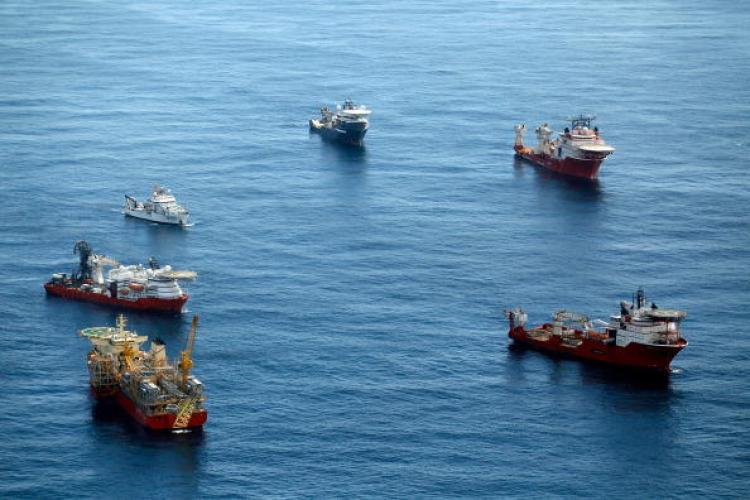
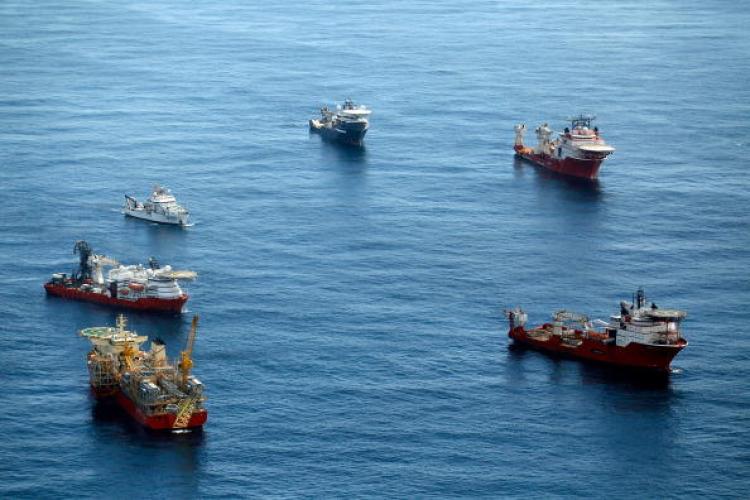
BP will conduct its “static kill” operation to pump mud and cement through the top of its well on Tuesday, provided the well passes initial “injectivity” tests, BP senior vice president Kent Wells said on Monday.
Adm. Thad Allen, national commander of the government’s response to the Gulf oil spill, explained that the operation will not actually “kill” the well. Rather, it is a test to determine whether “the well can have mud pumped into it at a very low rate. That could result in us filling the entire well up, bringing the pressure to zero,” he said during a press briefing on Sunday.
If the pressure reaches zero, “we’ve taken away about half the job we will need to do from the bottom. Ultimately, to kill this well, we’re going to have to inject mud into the annulus, which is the area outside the pipe and between the well bore, and then fill the well up itself. . . Doing the static test or static kill first allows us to advance the ability to try and bring the pressure down which is what we want to do, bring it to zero ultimately,” he said.
The two relief wells that are currently being drilled are BP’s ultimate solution to stopping the oil from leaking, and are scheduled to pump mud and cement from the bottom of the well later this month.
The static kill will also help monitor pressure readings. If the pressure drops, it indicates the well may have been breached.
“We’ve always said if we see a precipitous drop in pressure during the injection in the mud that we'll know. That will inform how we’re going to have to handle the bottom kill, the ultimate relief well kill, which is going to be the final solution,” Allen said.
The latest pressure reading has risen to 6,980 pounds per square inch, indicating that the well is doing fine.
The relief well can start pumping mud and cement from the bottom five to seven days after the static kill is completed, Allen said.
The first relief well has reached a depth of 17,864 feet below surface, while the second one is at 15,963 feet.