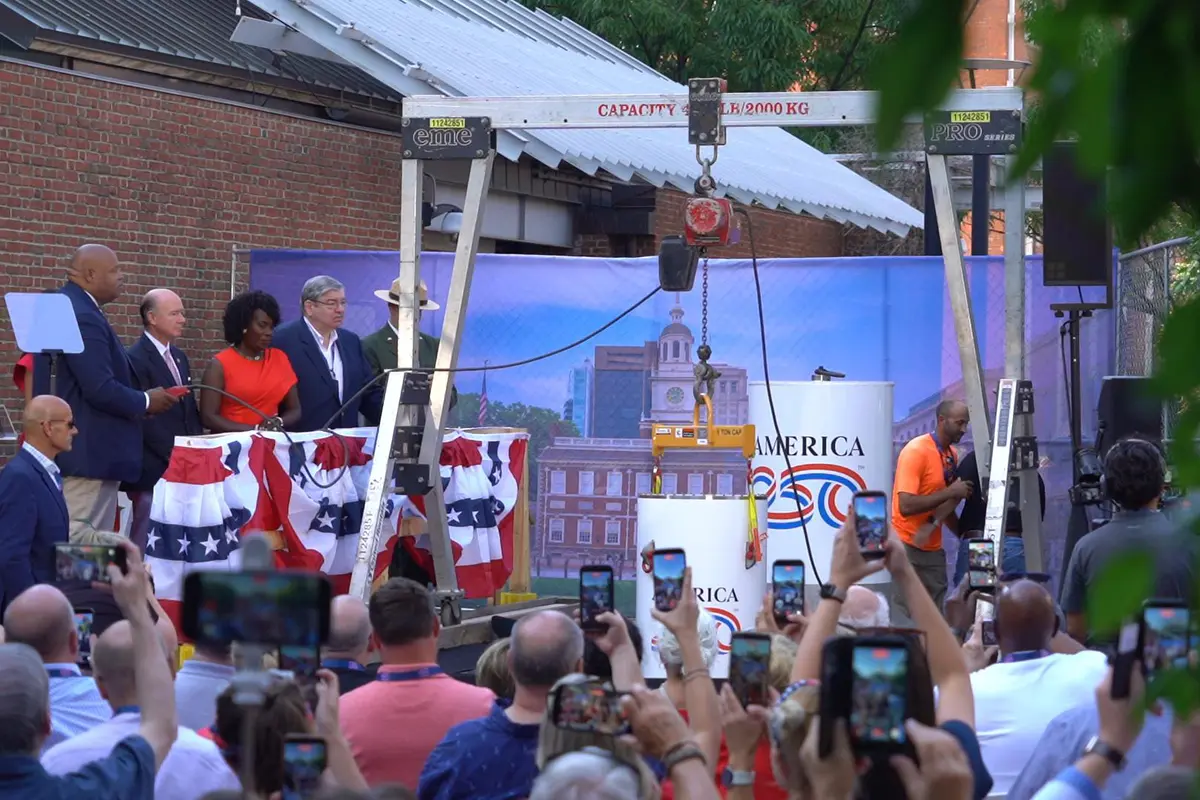
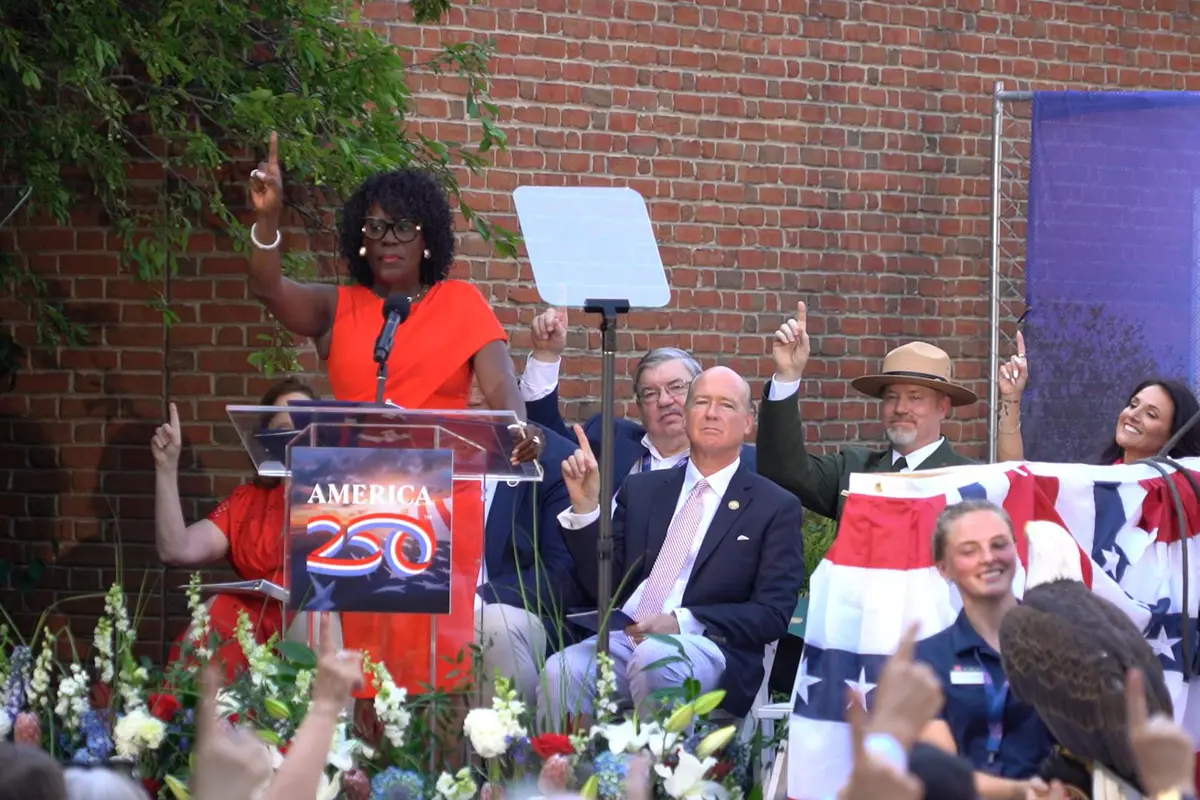
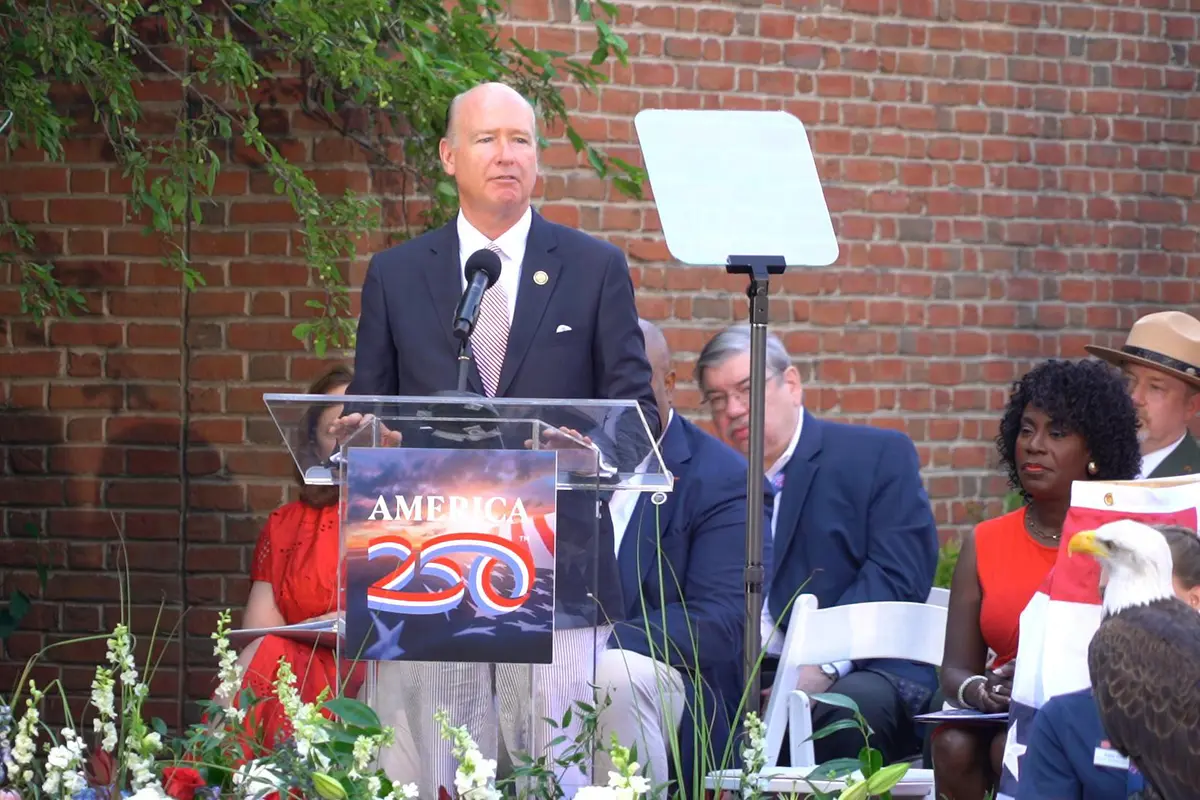
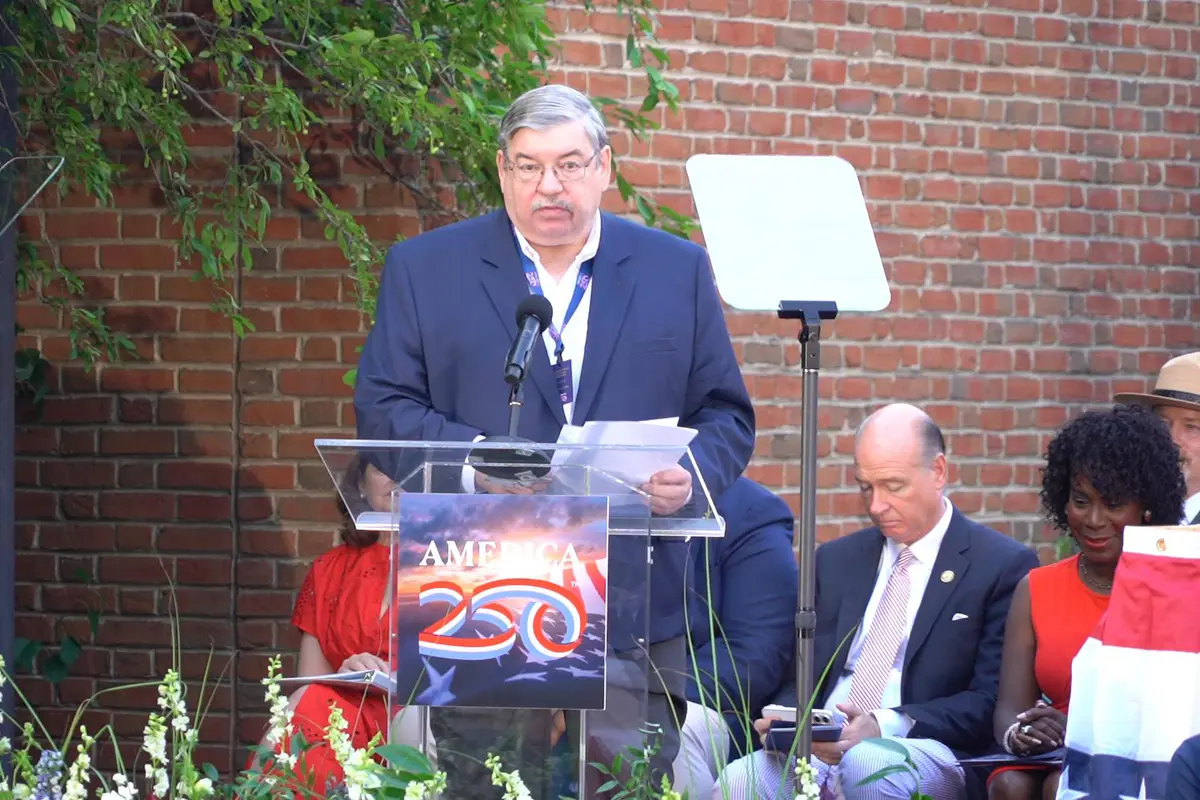
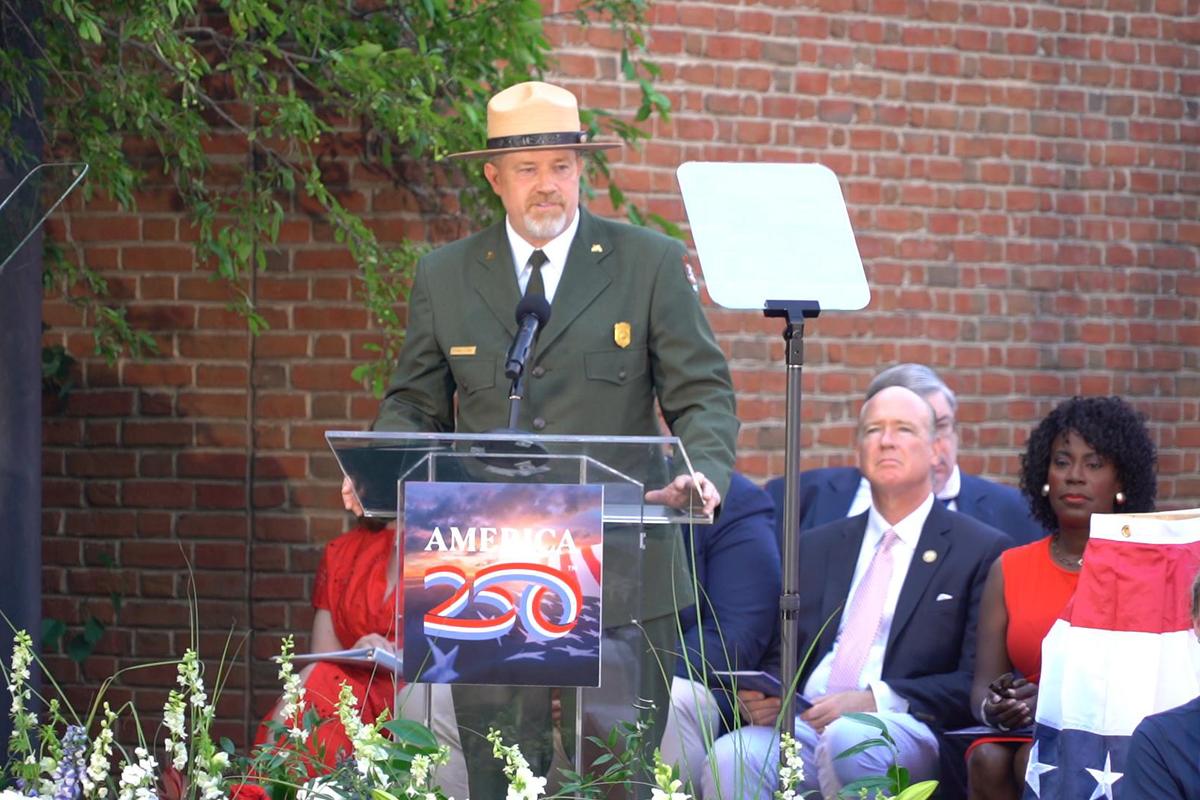
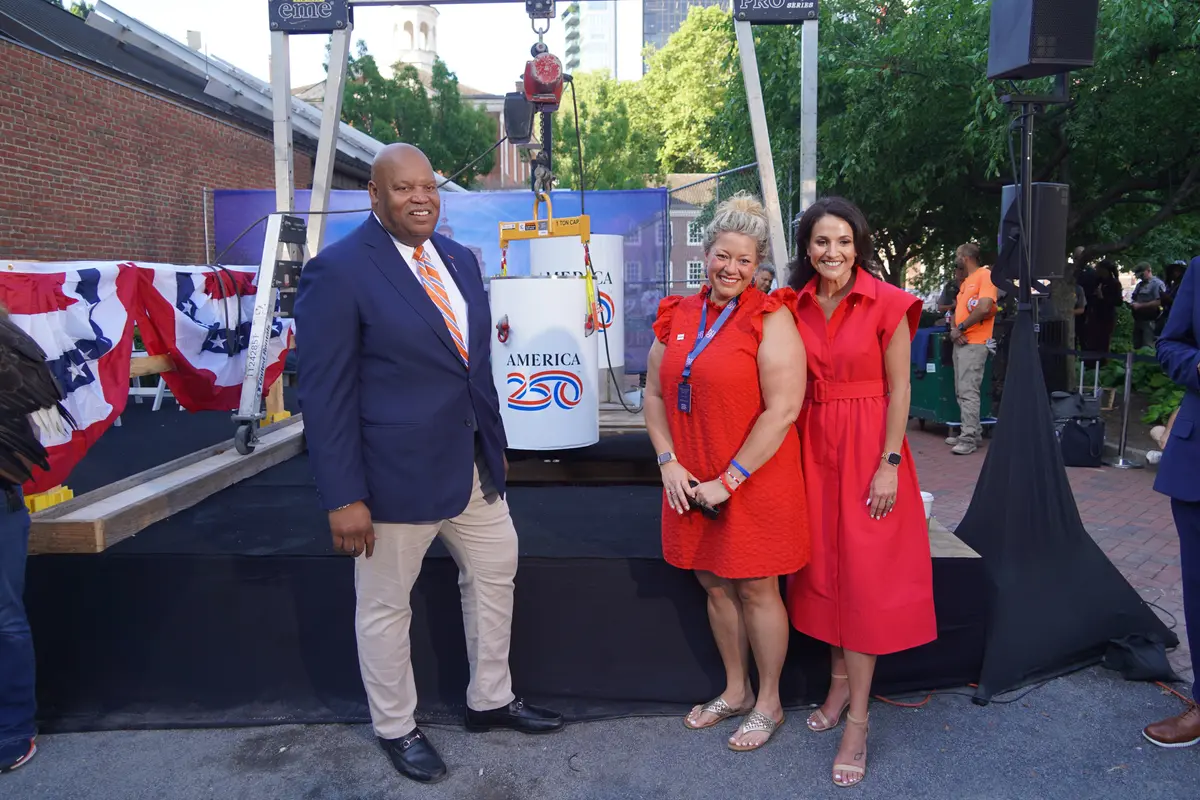
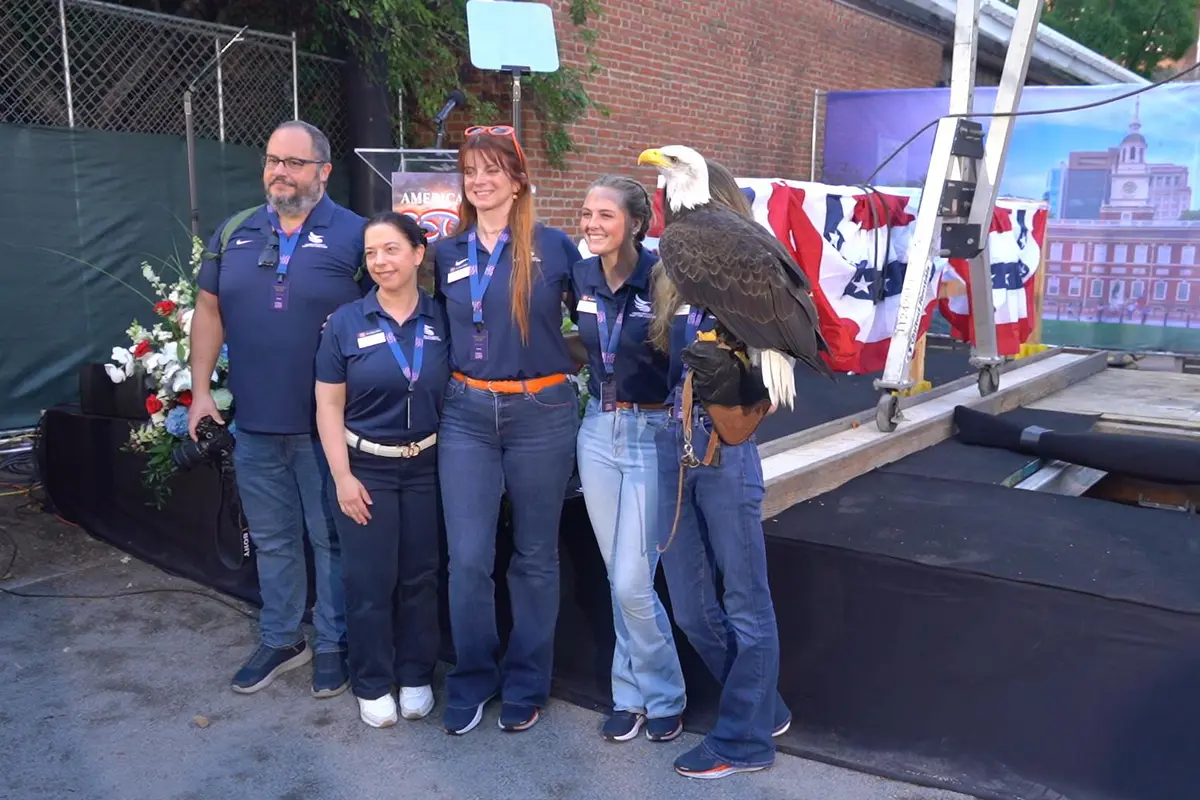
On the Fourth of July, the United States marked the 250th anniversary of its founding. At Independence National Historical Park in Philadelphia—the birthplace of the Declaration of Independence—the congressionally chartered U.S. Semiquincentennial Commission (America250) conducted a formal ceremony to bury the “America’s Time Capsule.”
U.S. Representative Robert Aderholt (R–Ala.) and Philadelphia Mayor Cherelle Parker were among the dignitaries in attendance.
Despite temperatures soaring to 100 degrees Fahrenheit under a relentless sun, large crowds gathered on site to witness this moment linking America’s past, present, and future.
As a national commemorative project, the 900‑pound steel capsule brings together more than 200 artifacts and letters from all 50 states, Washington, D.C., and five U.S. territories—capturing a panoramic snapshot of American society, culture, technology, and daily life in 2026.
The capsule will rest for 250 years and is to be opened in 2276, the nation’s 500th anniversary, carrying forward a record of this era across two and a half centuries.
Representative items include a 3D rendering of President Abraham Lincoln’s hand, a deconstructed smartphone, a natural crystal from Times Square’s 2026 New Year’s Eve ball, the Philadelphia Phillies’ Opening Day lineup card, an Olympic gold medal tied to the semiquincentennial year; a pocket edition of the U.S. Constitution signed by all sitting Supreme Court justices, letters and cultural works signed by state governors; unique memorabilia from major professional sports leagues, youth-focused civics education materials, and archival-grade documents and receipts reflecting the workings of public life.

‘250 Years From Now’
Jennifer Condon, executive vice president and CEO of America250, told The Epoch Times that the U.S. Semiquincentennial Commission was created by an act of Congress a decade ago.“And since then, we have worked diligently with all of the states and the territories to reach 350 million Americans for this once-in-a-generation milestone, the 250th anniversary of the signing of the Declaration of Independence, which happened right here,” she said.
“So, within that enabling legislation that established the commission, it said that we needed to bury a time capsule in Independence Mall on July 4, 2026.
“And so, we are here today to fulfill our obligation to Congress, but more importantly, to the American people. We have items from around the country that will be preserved for the next 250.”
“So we went to each of our states and territories in Washington, D.C., and we asked them to submit items for the time capsule that represented the people from their states, not just in terms of the geography and who they are today in 2026 but the values that they held dear, so that Americans who open it 250 years from now can see those values reflected in those items.”
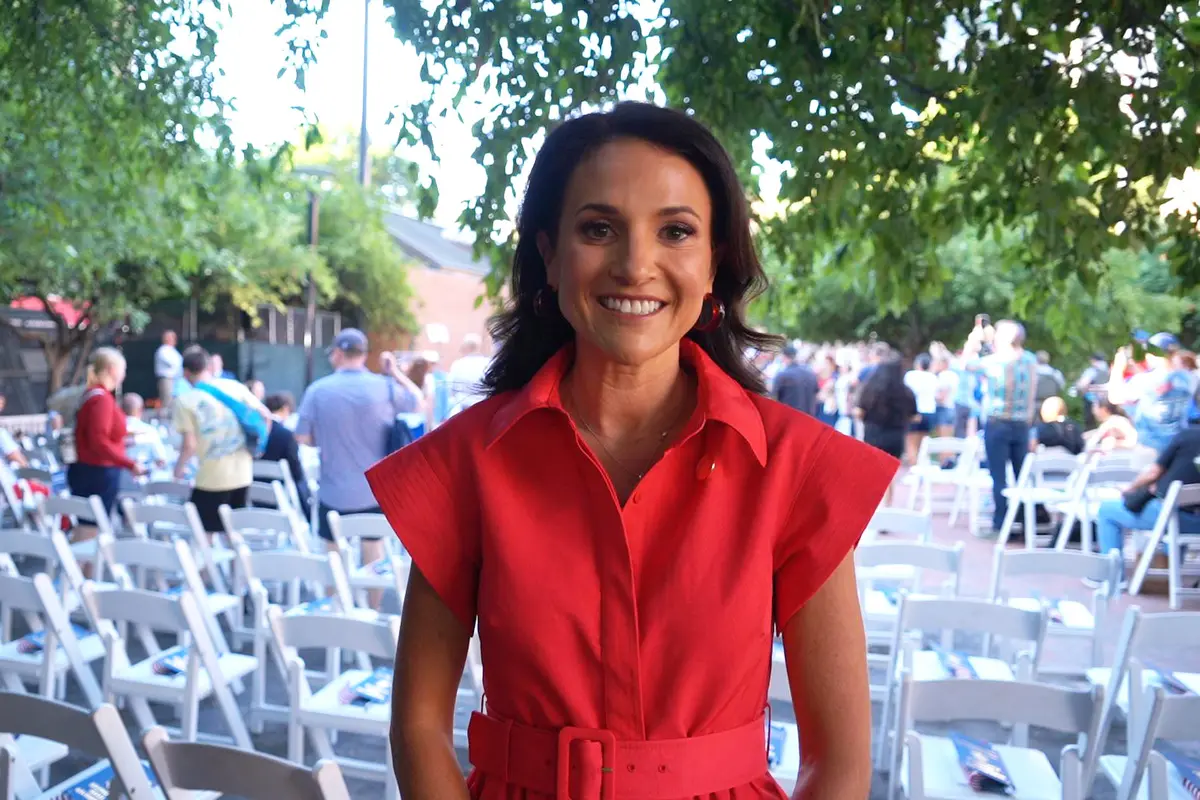
“I think about this all the time, that if this is our message to Americans of the future. I hope that they are surprised by some of the items, like an iPhone, and maybe 250 years from now, they‘ll wonder, ’What is this?‘ and ’What did they use it for?'” Condon told The Epoch Times when asked how future generations might feel when they open the capsule.
“But I think, more importantly, I hope they see the values of Americans today, that we are resilient, that we are unified as a country, especially in this moment today. We get this opportunity to unify around the semiquincentennial, and that we hold dear the same truths that were in the Declaration of Independence, and we hope that those same values and ideals are held true for Americans 250 years from now as well.”
Passing on America’s spirit and core values is essential, Condon said.
‘Our Rights Come From the Creator’
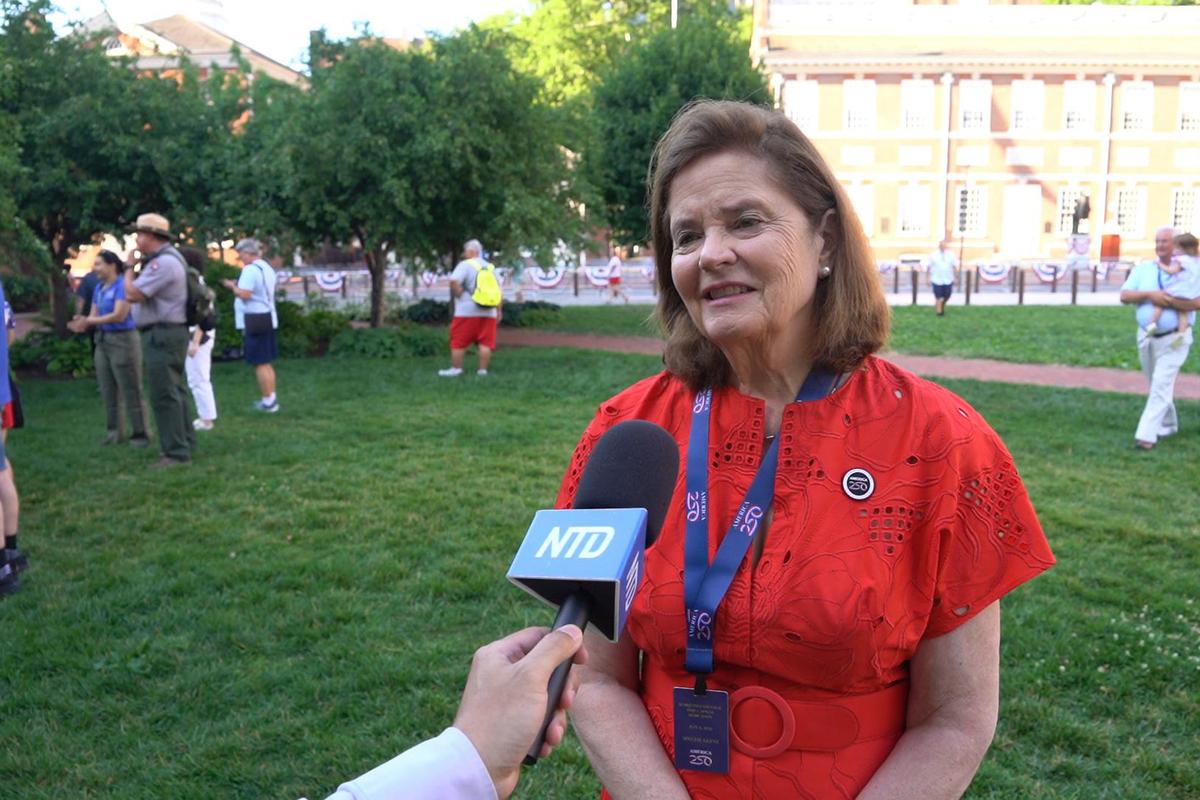
“The Time Capsule is to really preserve principles that our country was founded upon, and that still live on today, and that we know are going to still be alive 250 years from now,” Cathy Gillespie, a commissioner of America250, told The Epoch Times.She said transmitting America’s spirit and core values to the next generation is urgent.
“We have to start with teaching the fundamentals of our republic. We have to teach the next generation. First of all, the Declaration of Independence was one of the most magnificent documents ever proclaimed, because it was the first to recognize that our rights come from our creator, our rights come from God, that we’re born with our rights, and that the US Constitution was drafted 11 years later to protect those rights, and our US Constitution is still protecting those rights,” Gillespie said.
“So, first we have to teach our next generation those principles, and then they can carry those forward as engaged and empowered and inspired citizens.
“Our founding principle starts with the fact that we are born with our rights, that our rights come from our creator, that we have unalienable rights that no one can take away.
“And the other most important principle is that our government exists with the permission of the people. Our government exists by the consent of the governed, and that’s so important and so unique, because so many countries across the world don’t, don’t recognize that fact, in so many countries, people and their freedoms exist with the consent of the government. The government does not exist with the consent of the people. So, we are unique here, we’re exceptional in our country, and it’s those founding principles that make America an exceptional country.”
Gillespie said she can imagine the feeling when the capsule is opened.
“I think they’re going to see the excitement that we had, that our republic has survived and thrived for 250 years, and I think that they’re going to see messages of hope in the time capsule that we are, that we had confidence at that point in time that our republic was going to survive for another 250 years in order to be able to open it when our country celebrates its 500th birthday,” she said.
“My hope for America for the next 250 years is that we remember the preamble to our Constitution, that we strive towards a more perfect union, and that we continue to strive towards a more perfect union.”
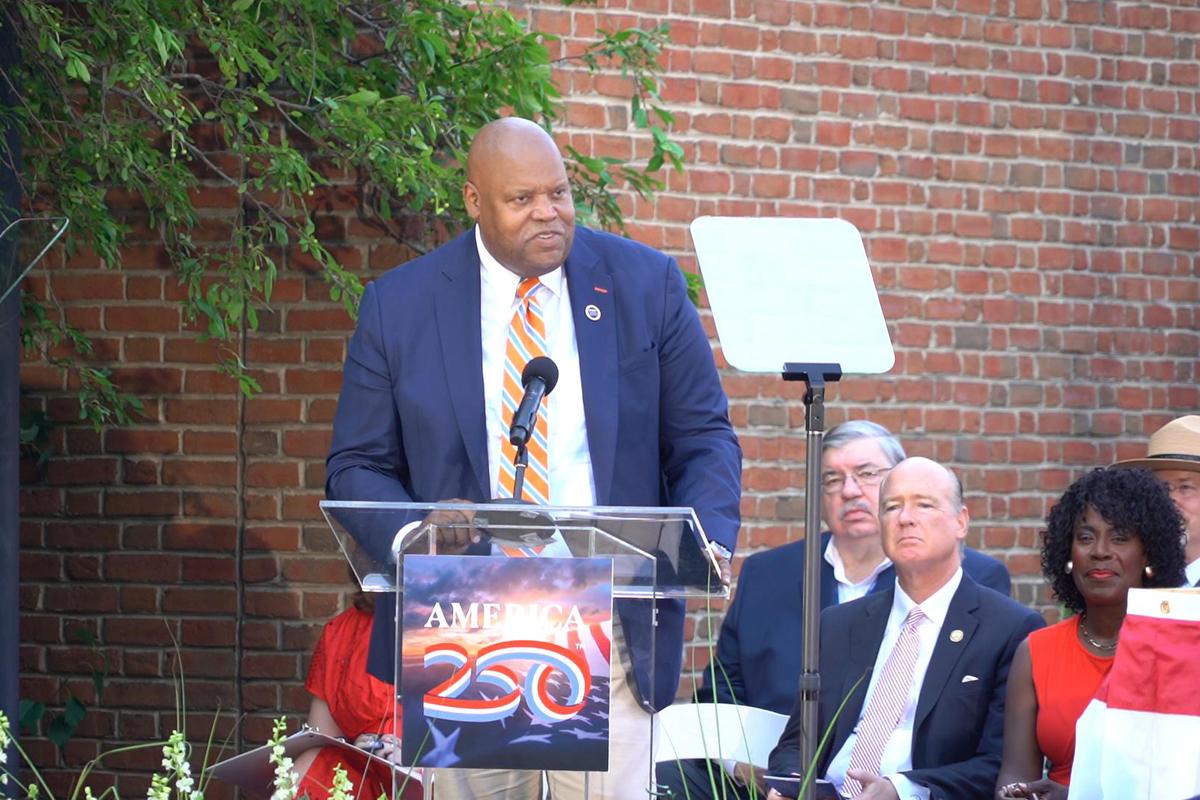
America250 Commissioner Reginald Browne told The Epoch Times that marking the 250th is profoundly meaningful.
“I think if you look at the evolution of the United States, where we started and where we are today, and particularly as an American who is in a financial service, this is who we are. This is, we’re the best country in the world,” Borwne said.
“And to me, this is opportunity to really talk about love of neighbor, love of country, but more importantly, what we believe, the rule of law, a certain set of documents, and just how we operate is really like free thought, freedom, and to me this is a celebration of freedom and individuality.
“I hope that one, we keep innovating, two, we are the leader of the free world, and really, I just hope that we mend some of the divisions that we have today, so they’re not persistent, and I think this is a really good starting point. The America 250 logo is a central theme that all Americans can get behind, and I think that this is an opportunity for just one moment to come and celebrate who we are today.”
Passing America’s values and spirit to the next generation is crucial, he added.
Honored to Witness History
Thomas Schulze, a German American psychiatrist and professor who became a naturalized citizen, said he feels proud of America.“It’s just amazing. 250 years ago, we founded that nation. I say we because I’m American, right? And now we want to share this with the next generations, many more, and 250 years. Somebody will open that, and it’s just the thought of it,” Schulze said.
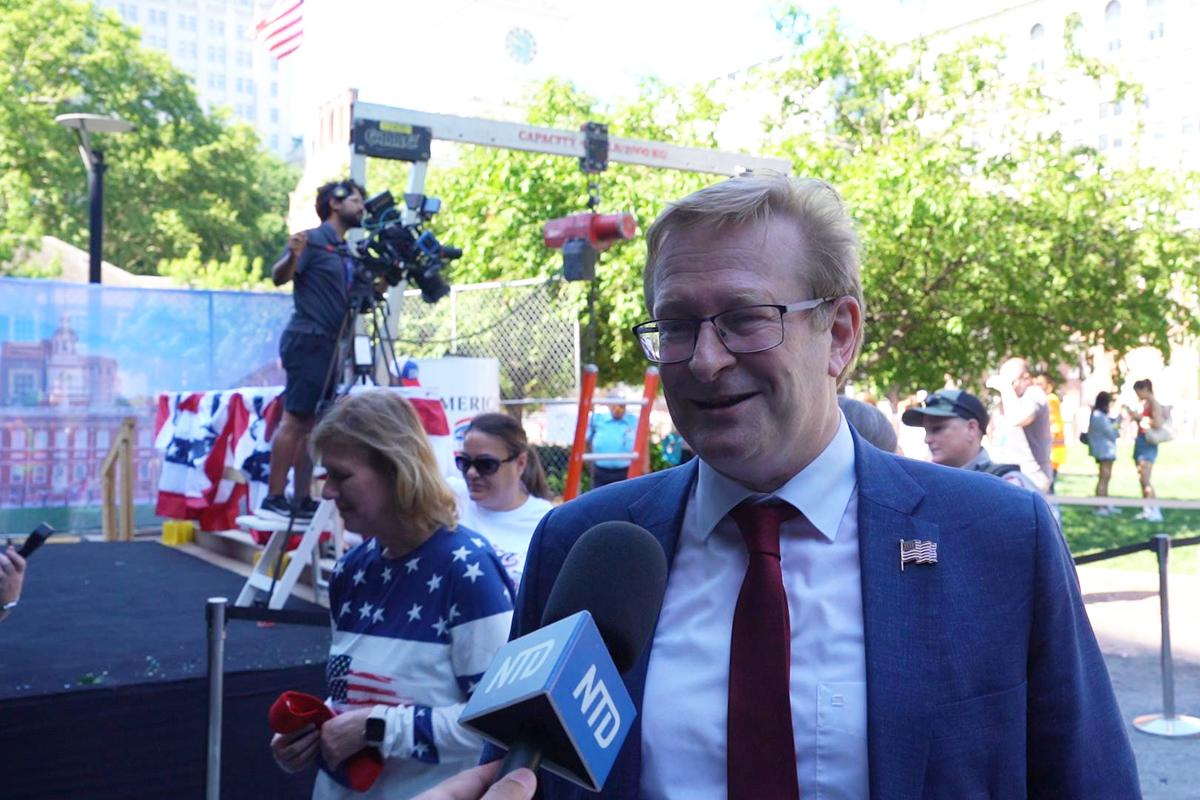
He told The Epoch Times he’s confident about America’s future.
“I think we have come a long way, but it’s all the things that were done back then that were written up, they’re still valid, and there have been fights, not everything has been great, there have been problems, we had civil war, slavery, and everything, but we struggled, and we came out of it better than before, and there are things right now that people fight about, and there’s lawsuits and there’s attacks and discussions, but this is America, it’s about a continuous fight, a struggle to achieve something better, the more perfect union,” he said.
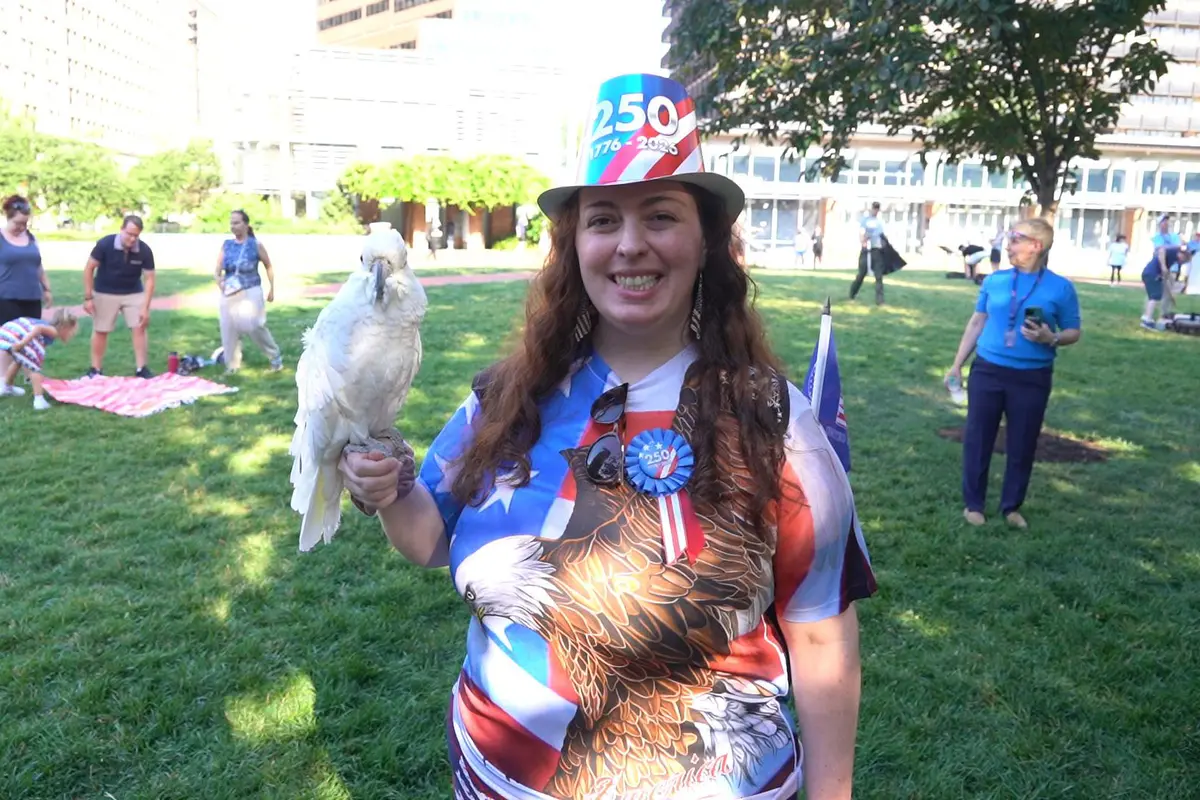
Jacqueline Sarricchio, a clinical EKG technician from New Jersey, said the time capsule is “pretty cool.”
“I saw they were doing this a while back, and I went. Oh, just, it’s not going to be open until 2276 when America turns 500. So, set me to decide to come witness history,” she said.
She hopes the country can find its way back to unity.
“I just wish, no, we weren’t so divided with everything, and it’s sad, but with all the politics aside, I do love America,” she said.

Blaine and Julie Dowell, a couple from Texas, said they traveled far to celebrate America’s 250th.
“Figured it’s the best place to be,” Blaine Dowell said with a smile. “Honored to be here. Won’t be around when they open it.”
He said that “hopefully, we’re still a thriving nation, long ways to go. They just can’t ever give up.”
“Inspired,” Julie Dowell said.
“It’s so unique to see in our lifetime. In other words, we'll never see it opened, but it’s neat to be able to see it buried.
“Generation that opens it are going to wonder how we survived with what we have, because the technology and everything in the way they'll live will be a lot different than what we have lived our lives as.”
Marking the 250th is a chance to pass on America’s values, Julie Dowell said.
“Parents have to take it, take into teaching their kids the future, the morals, the way of the generations live, you know, by teaching the kids it'll be the biggest thing is teaching the kids of what’s going to happen in the future,” she said.
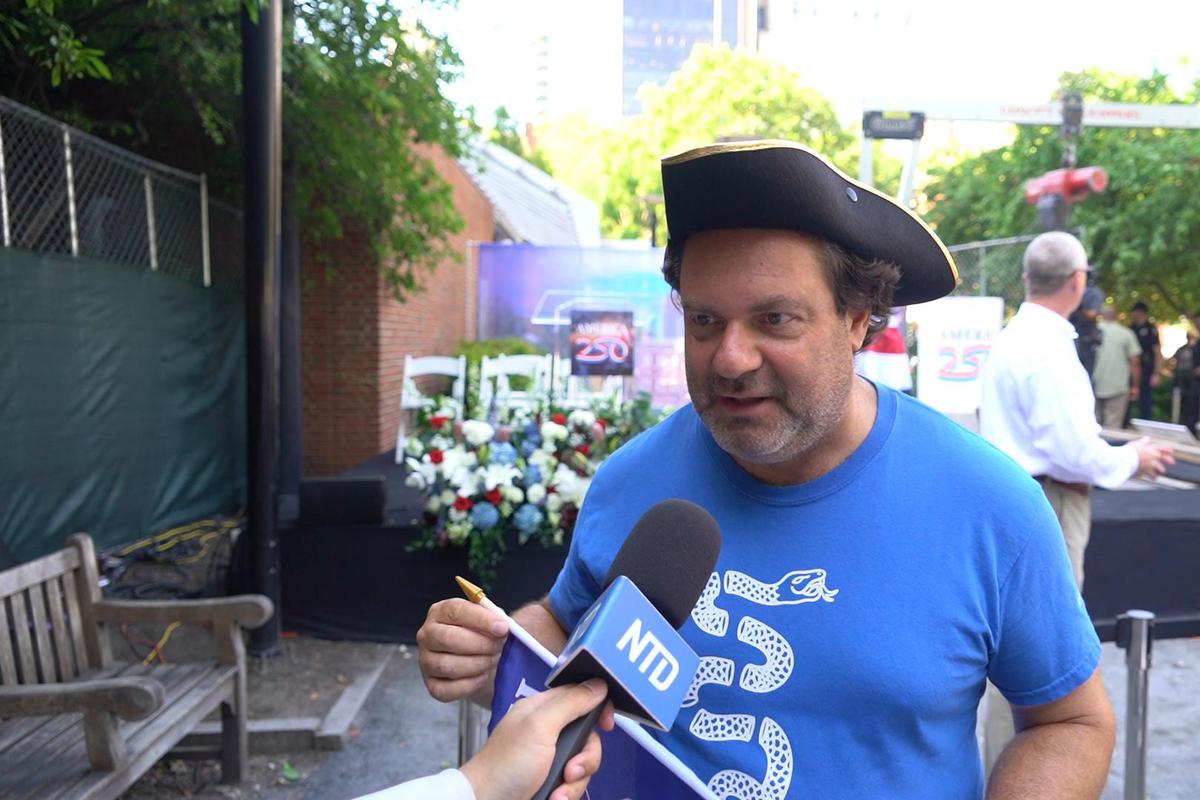
Gabriel Gottlieb, who works for the NBA’s Philadelphia 76ers, said he hopes future Americans will still cherish the constitutional values set forth by the Founders.
“I hope they appreciate what we have today, and I know things will be very, very different 250 years ago, but just be grateful that the country, you know, is around 250 years from now. You know, I mean, we’ve had a lot of ups and downs in this country, and this is a controversial time itself, and hopefully we'll look back and see that, you know, that liberty, freedom, democracy survived and pushed through for another 250 years and beyond,” Gottlieb said.
Passing on America’s values is essential, he said.
“Keep educating them about our country and our history, and let them know what the founders intended to try, how they tried to come create a new government that was better than what they had before, with certain inalienable rights, life, liberty, pursuit of happiness, and those kind of things, but then also our struggles and our big imperfections early on that we also had overcome, because we need to be aware of our true history, we can’t cover that up,” Gottlieb said.
“There are some who want to do that, but we can’t do that. We have to be aware of history in our country, in all countries, and learn from that, and just try to continue to be better people as we move forward in the future.
“And I hope future generations will look back, knowing that they and other generations in between have improved things from what they are today, just like we have improved things from what they were doing 50 years ago, and the founders were improving a better government, a better way of life for their people in their new country from what they had experienced in England.”

Joy Lin, a fifth-grader from Seattle, said she is “really excited for the future.”
“Think it’s got up this country, really. I’m really proud of the 250th anniversary, and I really hope it goes further,” she said.
Lin expresses her hope for the future of the country.
“It is to be like equality and peace for all men and women of all races,” she said.
As a member of America’s younger generation, she summed up the nation’s founding ideals as “life, liberty, and the pursuit of happiness,” adding, “I’m really happy here.”
Asked to imagine how people might react when the capsule is opened, Joy grinned, “Either they’re going to feel really like wow, or they’re gonna be like they don’t understand anything.”