


The head of Canada’s travel agency industry has expressed concerns that new security measures for Canadians travelling to the United States are “inconsistent” and could hurt business.
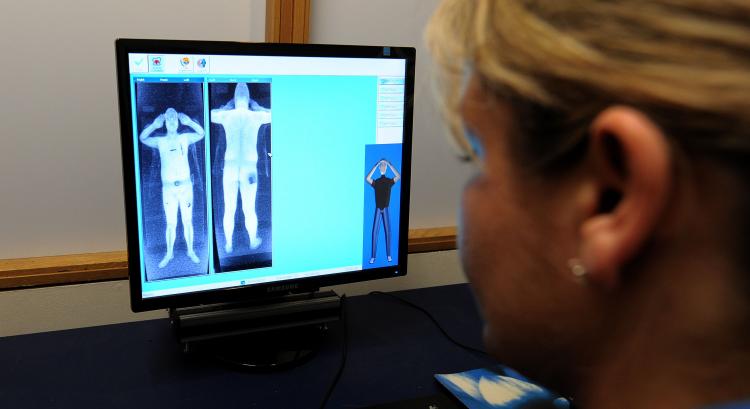
David McCaig’s comments come as eight airports across the country are preparing to introduce controversial full-body scanners after the failed bombing attempt on an Amsterdam-Detroit flight on Christmas Day.
New aviation security measures, which include the loss of carry-on baggage rights for travellers to the United States, have resulted in delays at North American airports.
McCaig, president of the Association of Canadian Travel Agencies (ACTA) and a board member of the Canadian Corporate Travel Association, says the new security measures “are inconsistent and we question how effective they really are.”
“We just feel that some half-measures, or measures that don’t really address all the issues, may generally hurt the business. I don’t just mean travel business—it could certainly hurt the economy as well.”
He cites an instance in which ACTA employees who were patted down at a Las Vegas airport everywhere but in the crotch area where the so-called “underwear bomber” hid an explosive, says body scanners are an invasion of privacy, and questions why business travellers can’t take their briefcases on the plane.
“I mean, why is it that a businessman can’t do a carry-on into the United States after it’s gone through the screening? Most business class travellers do a carry-on bag so that they can do their work while they’re on the plane—that’s part of the reason they’re paying for business class.”
As for those with “fast cards” who have been pre-screened for fast-tracking through security, McCaig says it’s “not clear what the rules are—that’s part of the problem.”
“We do consider security to be the prime and most important thing, but we need to have it consistent. It needs to be thought out a little bit more.”
In addition to full-body body scanners, Canada is planning to develop a passenger behaviour observation program focusing on identifying irregular or suspicious behaviour.
Arne Kislenko, a professor of international relations at the University of Toronto and a former senior security officer at Toronto’s Lester B. Pearson Airport, says behaviour screening is an important part of security.
“I guarantee you it’s not going to be any sort of panacea, it won’t cure everything, but it does, in fact, catch a few bad people regardless of whether it’s a science or not. I myself over 12 years in a senior post doing this kind of work every day, we caught people on a fairly regular basis,” he says.
However, he warns that the terrorists are very advanced and will find ways to get around any security system.
“The threat changes constantly. These are highly sophisticated people for the most part, and they'll always find a new way to mess you up. So we can never have perfect security.”
Some agencies in Canada, such as the RCMP and Canada Border Services Agency, already use similar programs. A number of other countries have behaviour screening in place at airports, including Israel where security experts begin observing travellers as soon as they arrive in the parking lot.
Civil liberties groups have voiced concerns about behaviour screening, saying it could lead to racial profiling. But according to a Transport Canada news release, this additional layer of security focuses on identifying those who are acting suspiciously “and not racial or ethnic profiles.”
ACTA’s McCaig says behaviour screening “has been extremely successful” and the government should make it a priority.
Kislenko, however, stresses that while more security is necessary at airports, security measures shouldn’t go too far.
“We should never want such draconian security that you couldn’t get out of the house if you wanted to. But we do need to be realistic, we need to improve security constantly.
“It’s a never-ending battle and the only major question that we all face is how do we reconcile these measures against our own civil liberties and the timing issue of getting many millions of people through airports and on to their destinations.”
David McCaig’s comments come as eight airports across the country are preparing to introduce controversial full-body scanners after the failed bombing attempt on an Amsterdam-Detroit flight on Christmas Day.
New aviation security measures, which include the loss of carry-on baggage rights for travellers to the United States, have resulted in delays at North American airports.
McCaig, president of the Association of Canadian Travel Agencies (ACTA) and a board member of the Canadian Corporate Travel Association, says the new security measures “are inconsistent and we question how effective they really are.”
“We just feel that some half-measures, or measures that don’t really address all the issues, may generally hurt the business. I don’t just mean travel business—it could certainly hurt the economy as well.”
He cites an instance in which ACTA employees who were patted down at a Las Vegas airport everywhere but in the crotch area where the so-called “underwear bomber” hid an explosive, says body scanners are an invasion of privacy, and questions why business travellers can’t take their briefcases on the plane.
“I mean, why is it that a businessman can’t do a carry-on into the United States after it’s gone through the screening? Most business class travellers do a carry-on bag so that they can do their work while they’re on the plane—that’s part of the reason they’re paying for business class.”
As for those with “fast cards” who have been pre-screened for fast-tracking through security, McCaig says it’s “not clear what the rules are—that’s part of the problem.”
“We do consider security to be the prime and most important thing, but we need to have it consistent. It needs to be thought out a little bit more.”
In addition to full-body body scanners, Canada is planning to develop a passenger behaviour observation program focusing on identifying irregular or suspicious behaviour.
Arne Kislenko, a professor of international relations at the University of Toronto and a former senior security officer at Toronto’s Lester B. Pearson Airport, says behaviour screening is an important part of security.
“I guarantee you it’s not going to be any sort of panacea, it won’t cure everything, but it does, in fact, catch a few bad people regardless of whether it’s a science or not. I myself over 12 years in a senior post doing this kind of work every day, we caught people on a fairly regular basis,” he says.
However, he warns that the terrorists are very advanced and will find ways to get around any security system.
“The threat changes constantly. These are highly sophisticated people for the most part, and they'll always find a new way to mess you up. So we can never have perfect security.”
Some agencies in Canada, such as the RCMP and Canada Border Services Agency, already use similar programs. A number of other countries have behaviour screening in place at airports, including Israel where security experts begin observing travellers as soon as they arrive in the parking lot.
Civil liberties groups have voiced concerns about behaviour screening, saying it could lead to racial profiling. But according to a Transport Canada news release, this additional layer of security focuses on identifying those who are acting suspiciously “and not racial or ethnic profiles.”
ACTA’s McCaig says behaviour screening “has been extremely successful” and the government should make it a priority.
Kislenko, however, stresses that while more security is necessary at airports, security measures shouldn’t go too far.
“We should never want such draconian security that you couldn’t get out of the house if you wanted to. But we do need to be realistic, we need to improve security constantly.
“It’s a never-ending battle and the only major question that we all face is how do we reconcile these measures against our own civil liberties and the timing issue of getting many millions of people through airports and on to their destinations.”


