
GREEN MOUNTAIN, N.C.—The fresh scent of rain lingers along a winding road through the Appalachian Mountains, leading to Double Island, one of the communities hit hardest by Hurricane Helene.
This scenic corner of western North Carolina—dotted with rustic red barns adorned with hex signs, sweeping cornfields, and country roads with names like Possum Trot and Pig Pen—faced a brutal challenge from the hurricane but emerged even stronger.
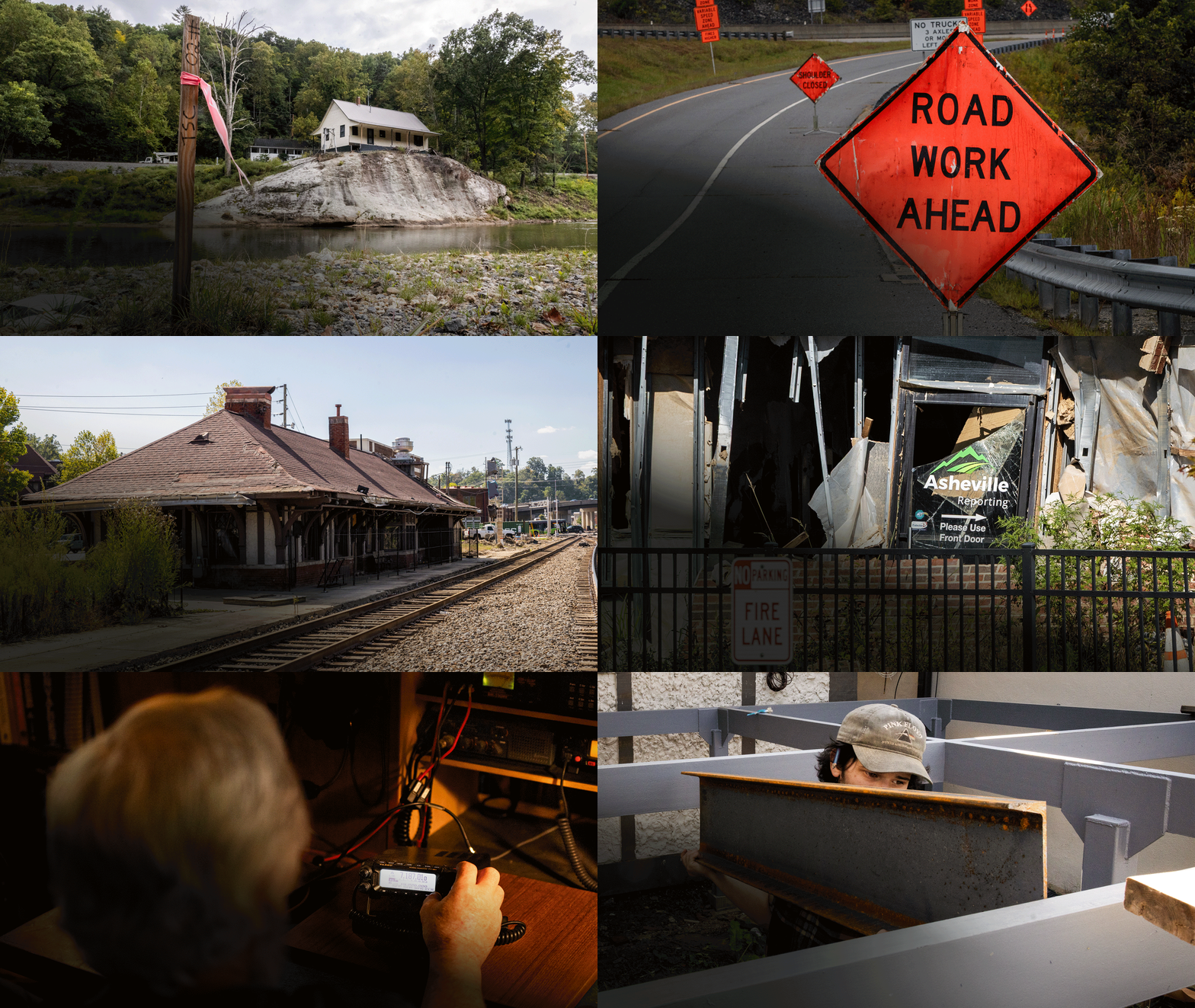
Dave Keister, 57, still lives in an RV near where his home and motorcycle shop once stood, across the road from the North Toe River.
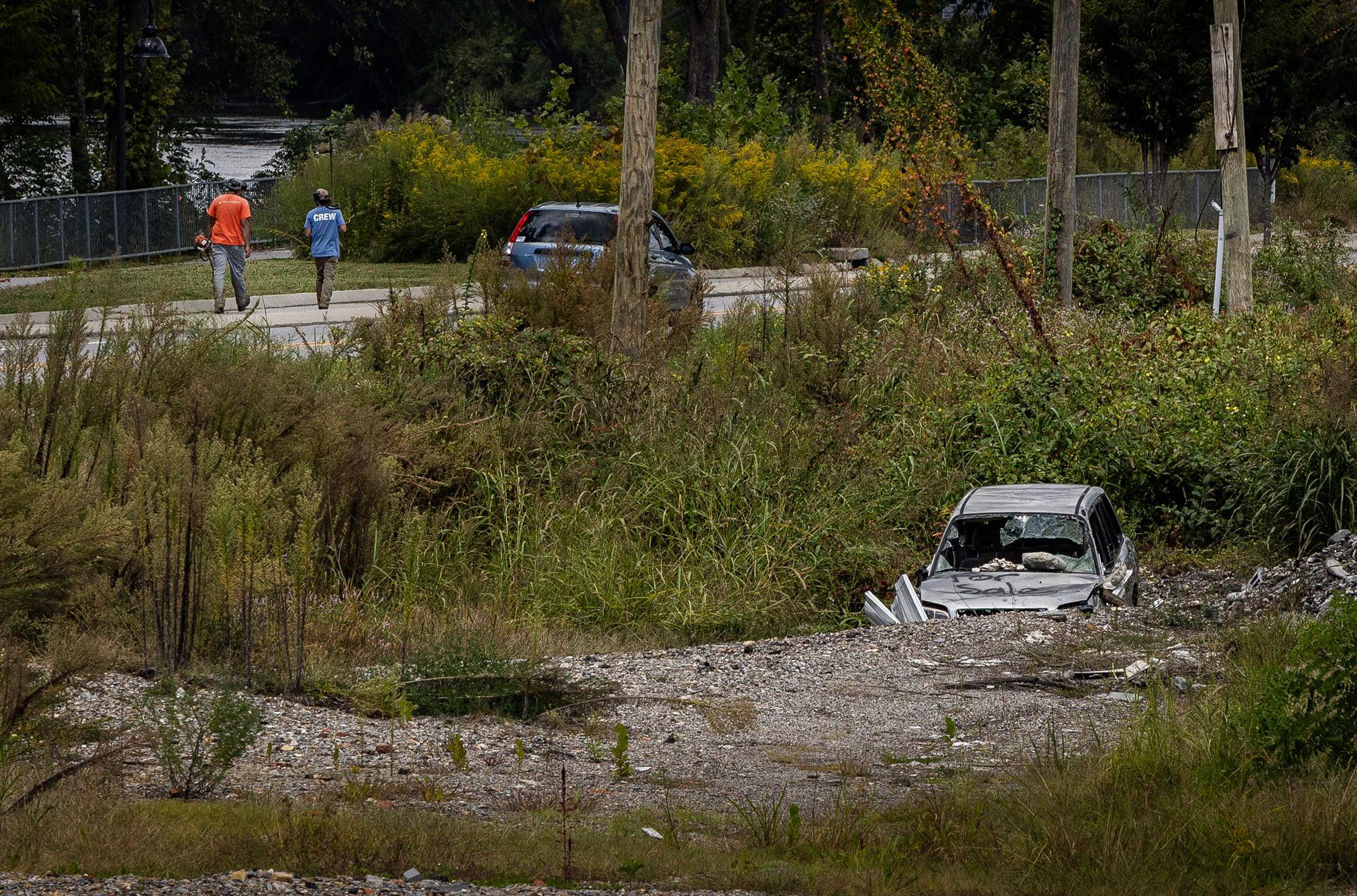
The mid-September sun glistens on the river, a picture of tranquility as leaves drift down from towering trees on a cool breeze. It flows peacefully today, in stark contrast to the hell and high water it unleashed a year ago.
Keister stands among a jumble of vintage motorcycles surveying the aftermath that changed his life.
“I’m starting from scratch,” he said.
After months of wrangling with paperwork and bureaucrats, Keister received a check from the Federal Emergency Management Agency (FEMA) for $42,000 in July. It was far less than what his home and motorcycle shop were worth, but he said it’s a start.
He isn’t the only one still struggling.
But there was a silver lining for people here, especially in the Double Island neighborhood by the river. Neighbors came together and formed new bonds that hadn’t existed before.
Steady rain had been falling on Western North Carolina as the hurricane headed northward. Winds intensified on the evening of Sept. 26, according to Double Island residents who said they witnessed multiple tornadoes touch down.
The North Toe River in Yancey County rose an estimated 30 feet above normal, according to the report. Eleven people in the county died from the storm, according to the state’s official numbers.
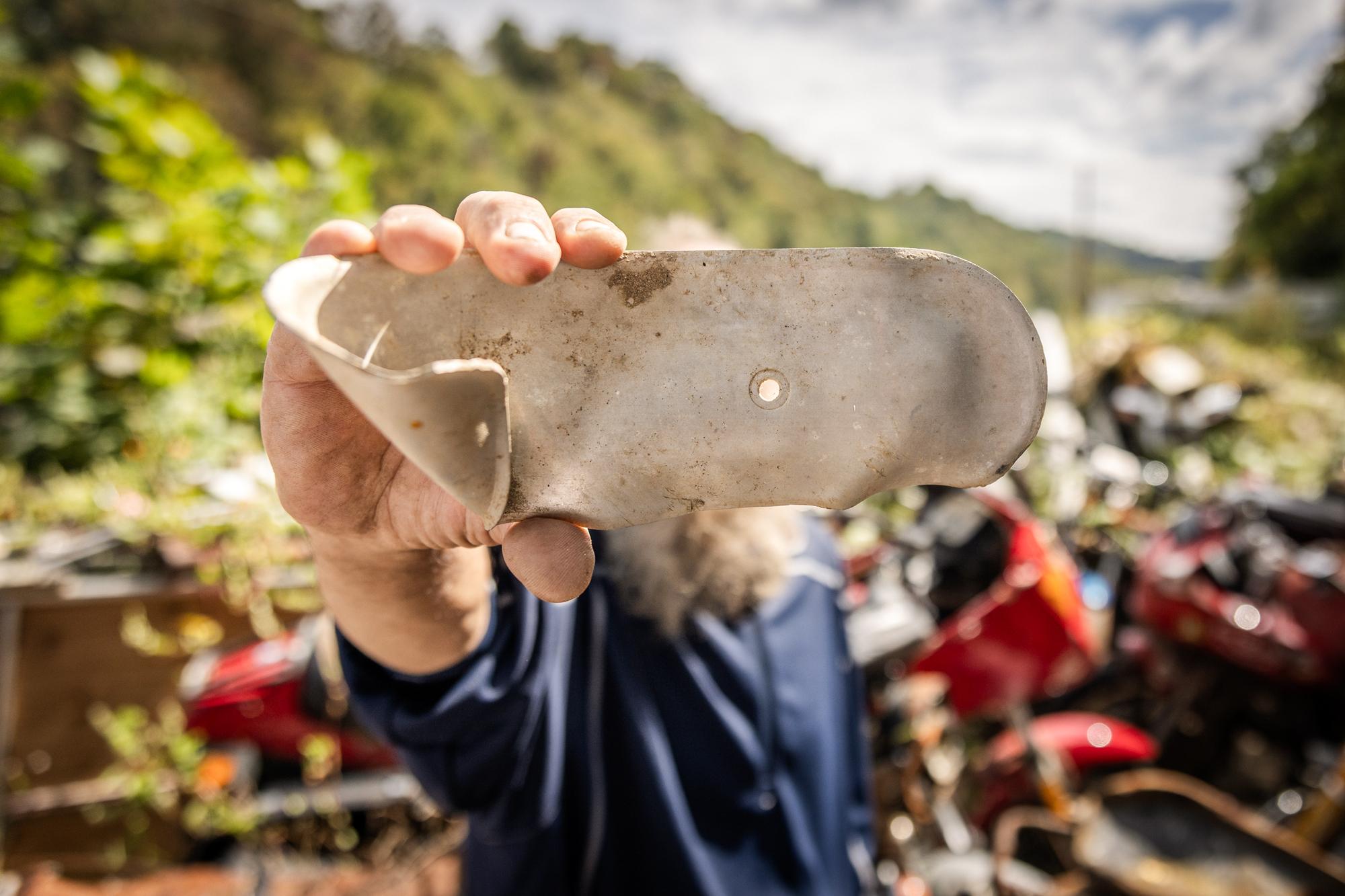
Keister, who has experience as a rescue worker, said the storm nearly took his life. He attributes his survival to prepping for the storm and remaining calm.
As the river rose, Keister said, he watched the water creep into his downstairs area. He said he could hear the wind whipping outside, howling its fury.
The water flooded the first floor of his home and climbed toward the second story. Keister said that in the time it took him to walk across the length of the second story and get out the back door, the water was past his ankles.
He said he grabbed his dogs and made it outside, heading to his car, which he’d parked on higher ground. He’d just gotten his dogs inside when, out of the corner of his eye, he saw something big moving.


He said he picked up his phone and started recording video, only to realize that it was his house floating by.
“That was my house that I just got out of, and it had spun 180 degrees,” Keister said. “I’m now looking at my front porch from the river, see my solar panels on the roof.
“There was no space to be emotional,” he said.
“I was so far from being out of the woods.”
The water kept rising, so Keister drove his car farther up the steep mountainside, hoping that it would be high enough.
“I’m looking at my dogs and going, ‘Well, we got a 93 percent chance for not getting out of this,’” he recalled.
The water crept up to the back tires and came to a stop. Wet and cold, Keister slept fitfully in the car that night. With limited fuel, he turned the car on just enough to stay warm.
The next morning, Keister began making his way to his neighbors to check on them. At one house, only the stone chimney remained in the place where his friend had lived.
His neighbor was one of four area residents whose bodies were never found. Keister said he put up a cross at the site in his friend’s memory.
A ‘Revolving Door’
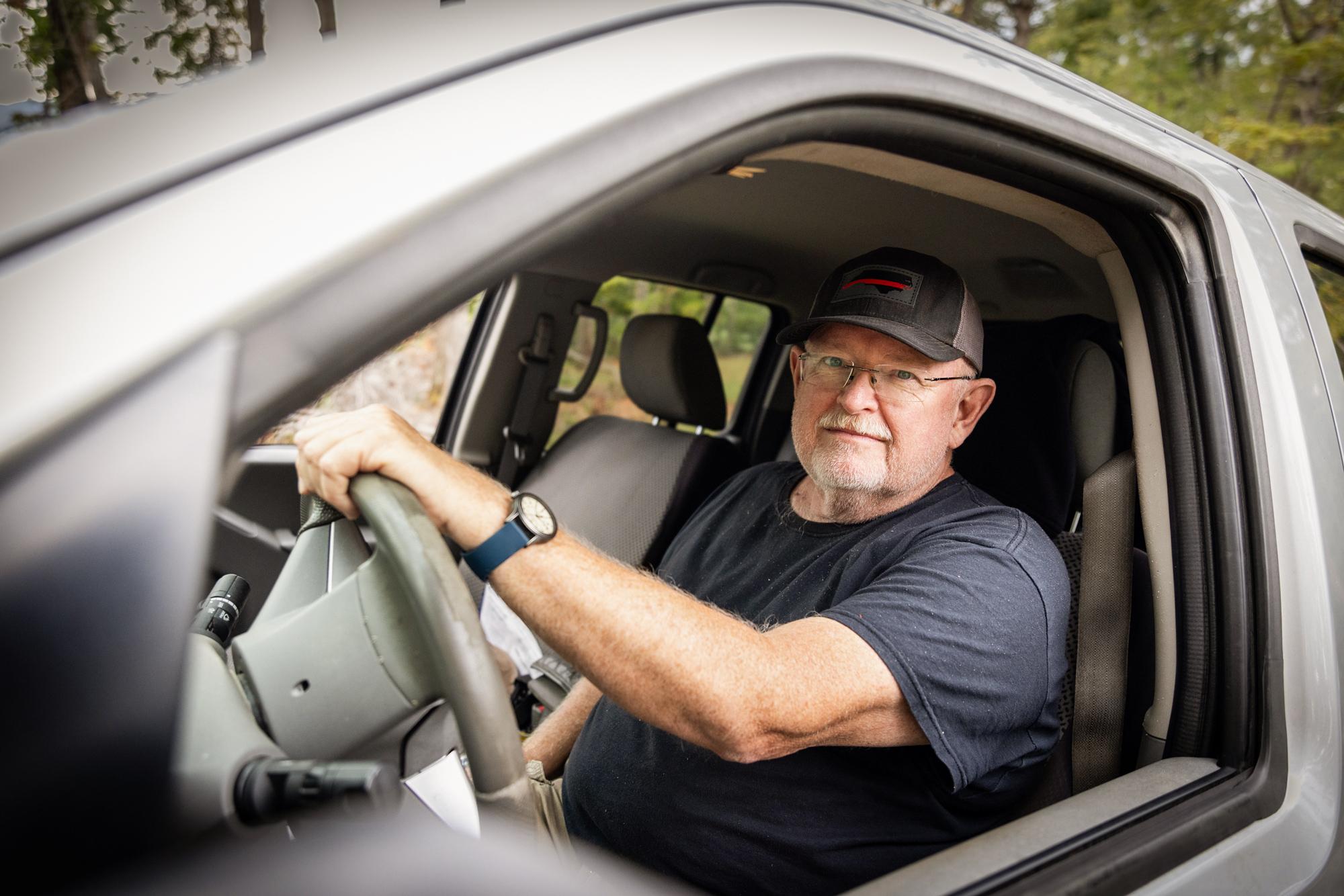
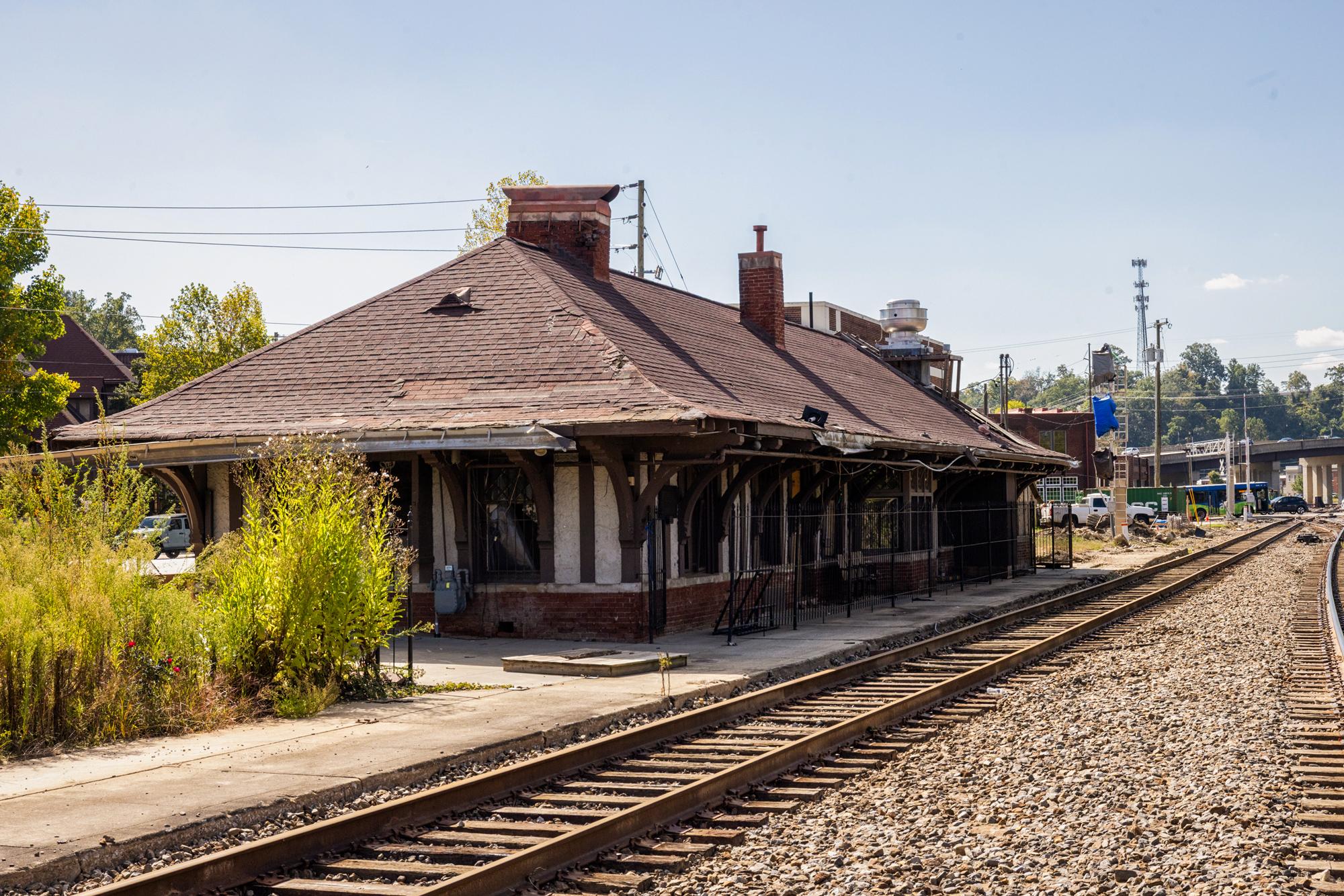
Dan Buchanan, 66, assistant fire chief for the Double Island Volunteer Fire Department, called the struggles with FEMA challenging and the agency’s response piecemeal.He said the storm flooded the fire department, which sat beside a stream. Seven or eight different FEMA coordinators have been assigned to the claim.
“It’s a revolving door constantly,” he said.
The department is hoping to recover some $800,000 from FEMA for losses and labor.
FEMA’s paperwork is tough, Buchanan said. The department had to track all hours worked and had to prove that water had flooded their building.
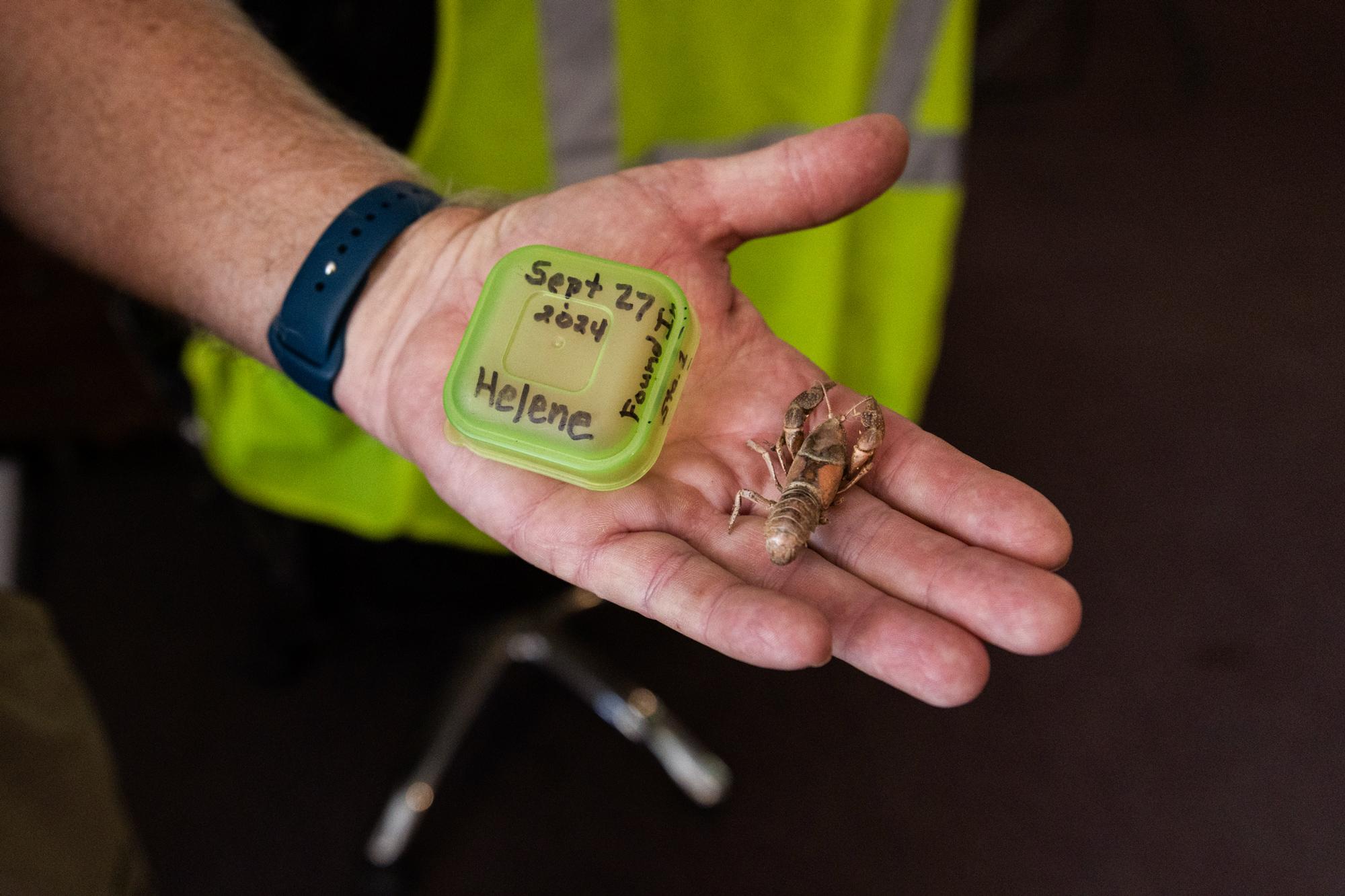
He said that’s when he showed FEMA workers all of the crawdads found on the station floor when the waters receded.
“We were ready to throw in the towel,” Buchanan said.
In June, he heard about a man who had finally gotten an RV to live in, after living in his car since the day after the hurricane.
Contracts Reduce Recovery Time
Tracy Hilburn, a government services project manager with Hunt, Guillot & Associates in Louisiana, is helping the fire department with its FEMA paperwork.His firm helps communities get the money that they are eligible for when disaster strikes.
“The biggest thing that communities can do to prepare for something like this is to have pre-position contracts in place prior to a storm for program management,” he said.
For affected communities across the country, such a move can significantly reduce the time required for recovery.
Emergency management systems should plan to have shelter and pre-contracts for debris removal, food, and medical transportation, which would go into effect upon approval by the community or local government.
“You have now met the federal procurement guidelines,” he said. “You’re not scrambling.”
Hilburn said people complain about FEMA, but much of disaster relief falls to the states.
FEMA is in the process of being reorganized, shifting to a “lean, deployable disaster force” that will empower states to provide relief for their citizens, reduce wasted tax dollars, and better serve the public, according to a DHS statement.
“No one knows what the future requirements will be on the states,” Hilburn said.
Lucky to Survive
Buchanan was one of 16 people who lived at the fire station for months in the aftermath of the disaster.Like many others, he counts himself lucky to have survived.
Fire department crews were out putting up barricades and trying to cut trees. As the winds grew stronger on the evening of Sept. 26, Buchanan said, he saw three tornadoes touch down. Crew members were clearing a log on the road, so Buchanan set out to warn them to return to the station.
Before Buchanan could make it to them, a tree fell in his path. He decided to backtrack to the station, but another big oak fell in front of him.
When he got out of his truck, three more trees snapped behind him, blocking his exit. Overhead, trees thrashed wildly as darkness fell.
“It was just like watching a movie. I mean, it was unreal,” he said.
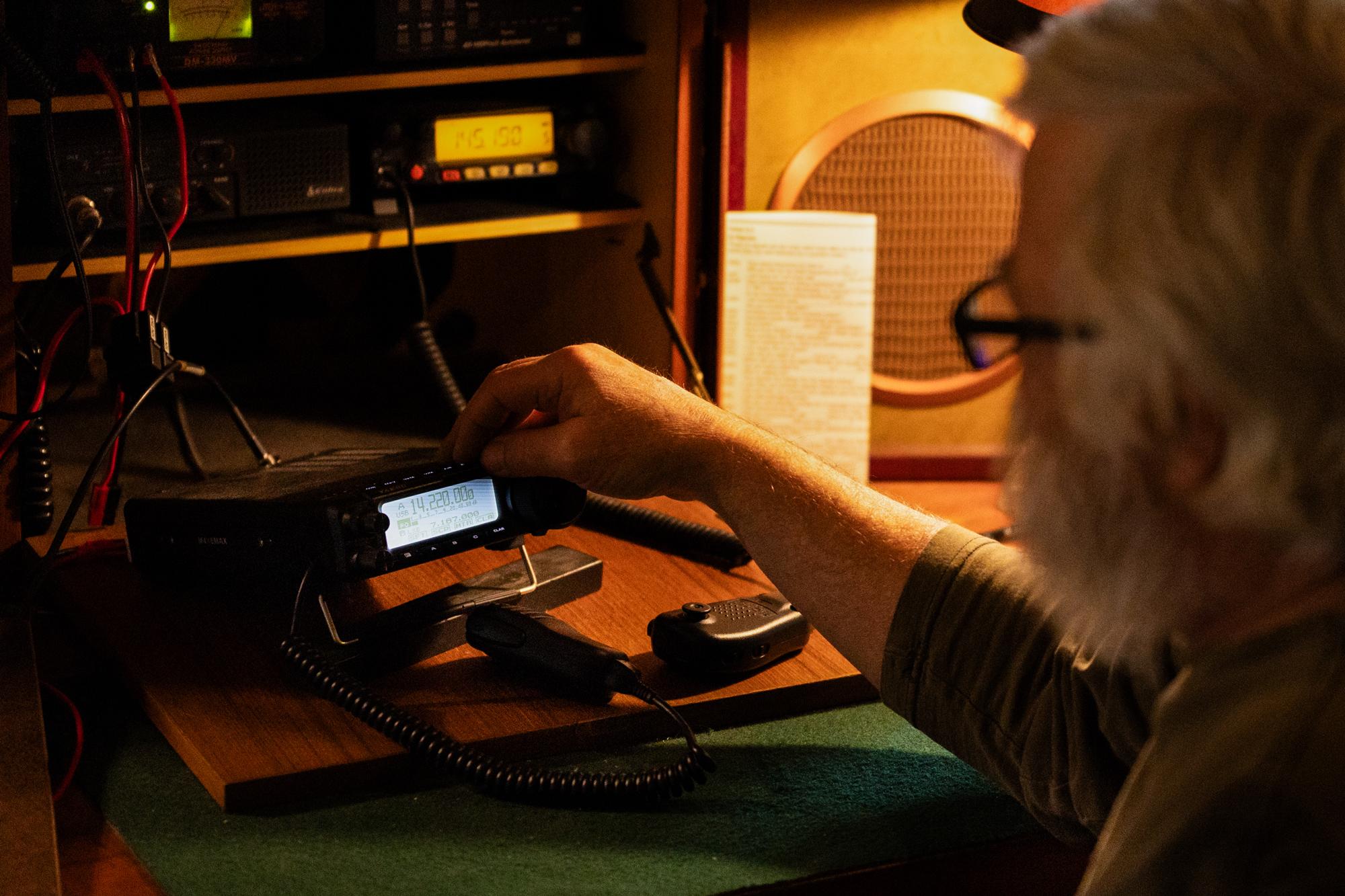
Buchanan grabbed his radio and called for help. About 30 minutes later, he saw headlights through the trees.
“I stood up, and I looked up at the trees,“ he said. ”I just openly said: ‘God, this is on you. This is yours. Get me home.'”
He crawled through a ditch, made it through thrashing trees, threw himself in the truck bed, and lay down as it drove back to the station, trees crashing near the back of the truck.
“We pulled in the driveway, and the last tree fell at the corner of the driveway. And then we were there,” he recalled.
And that’s where firefighters and their family members stayed through much of November, Buchanan said.
“If we get a thunderstorm, people still are upset. Kids are traumatized right now,” he said.
A lot of older people in the community call the station when the weather turns bad, asking whether there’s another big storm coming, Buchanan said.
“People get pretty nervous,” he said.
In a holler off Big Brush Creek Road near Green Mountain, John Kruppenbach, 65, braved the storm alone.
Towering trees around his property dipped and swayed like “one of those inflatable dudes,” he told The Epoch Times in 2024.
Wind and rain lashed the mountaintops, snapping trees like toothpicks.
Kruppenbach said he heard “boom, boom, boom” as trees crashed onto the roof of his house, punching holes in it.
He scrambled to get buckets to catch the rainwater pouring into his home, surprised by the savagery of the wind.
“With trees hitting and water coming in, it seemed possible it was the end,” he said.
A year later, Kruppenbach got some help from FEMA and finally managed to replace his roof.
“Yeah, dealing with FEMA was not the best,” he said. “I’ve heard some people have good experiences with it.”
He said he tried to get reimbursed by FEMA for a generator that he needed during a month without power. A transformer down from the storm was still lying in his driveway in August.
“At one point, they were trying to get me to prove my electricity had been off,” he recalled.
Kruppenbach said that driving around the county, he can see that a tremendous amount of cleanup has been completed. But the disaster was so massive that it could take years for the community to fully recover, he said.
United They Stand
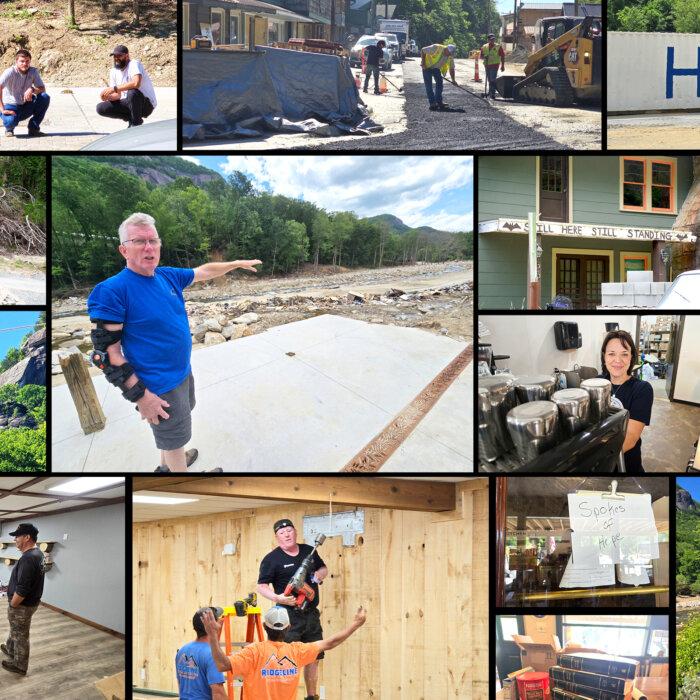
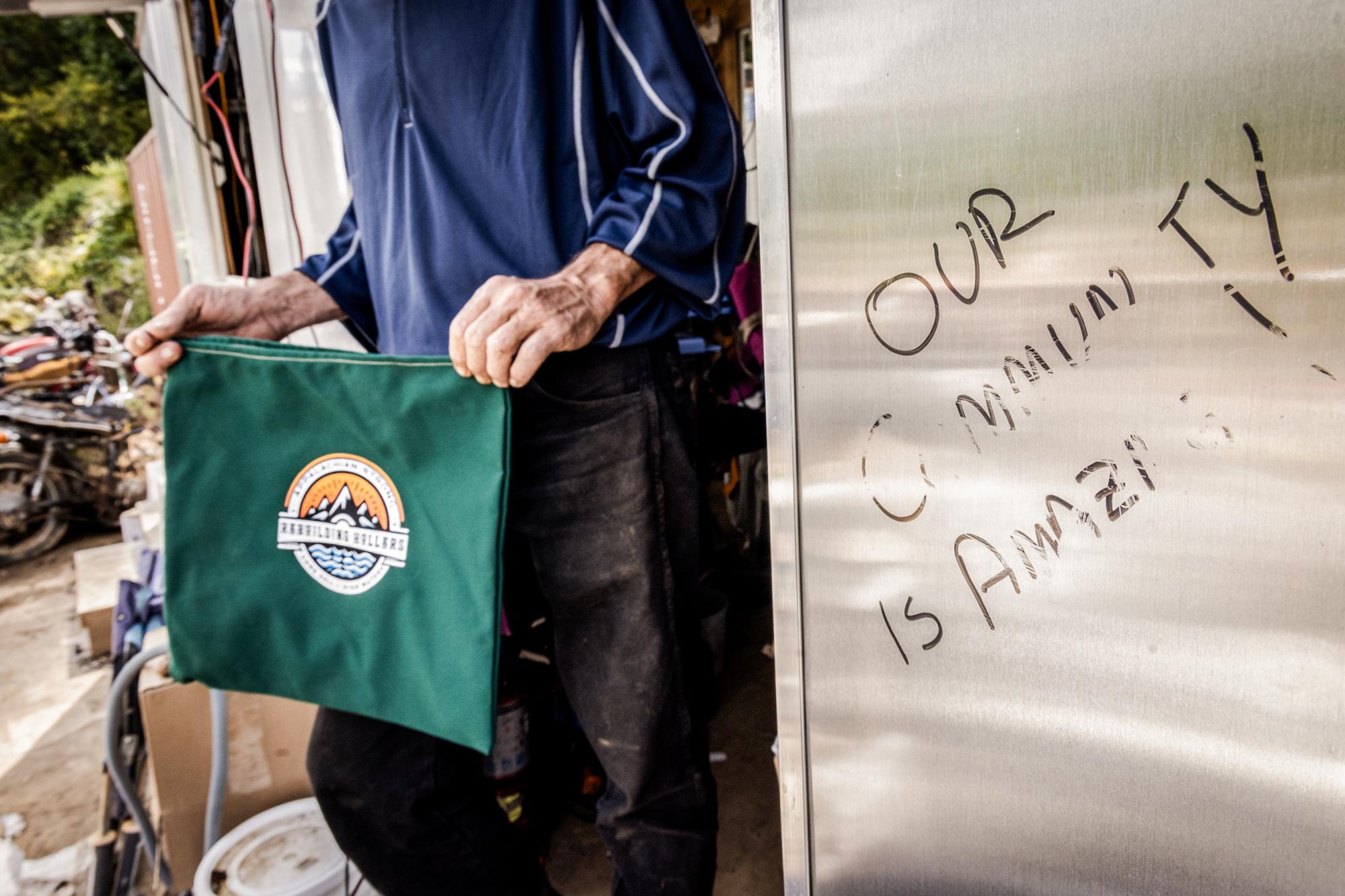
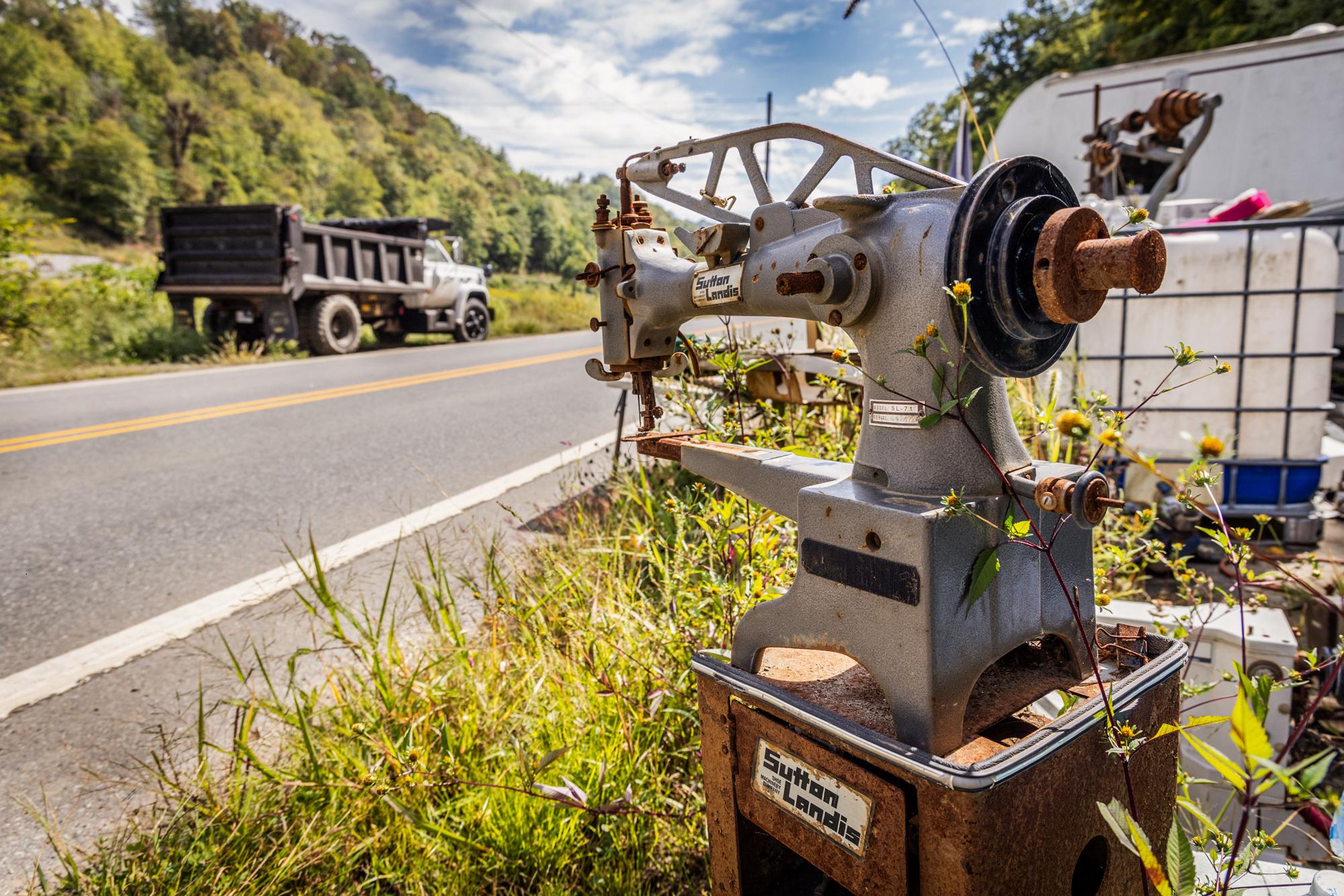
Although Keister continues to struggle, he said he has made it his mission to help others in the community. He helps out some of the nonprofits in the area by sewing items that they can sell to make money.Since the disaster, he has joined the Double Island Volunteer Fire Department, which he said went far beyond what most departments normally do during a disaster.
“It’s important to give back,” Keister said.
“People came together, ideology kind of went out the window. It’s like, you’re a human on the planet. You need help.
“That’s what people do in the country.”
In the Double Island area, neighbors helped each other after the storm by clearing roads, cutting trees, and cooking meals. Working together helped build lasting community strength.

“At least within our fire district, Double Island, every road was cleared and every person in our district was accounted for within five days, six days,” Keister said.
Such efforts demonstrate how the community turned its immediate response into ongoing resilience, ensuring that it is better prepared for any future crises.
Buchanan stood at the river’s edge a year after the storm, marveling at how the House on the Rock, as it’s known locally, survived 2024’s raging flood. It’s still standing on a hilltop some 30 feet above the river. It survived the aftermath of a storm that left many without power, water, or a home.
He recalled struggling to get help for his sister and mother, both with health issues, who were trapped by the storm because the road to his mother’s house was destroyed.
Buchanan looked away, his voice raw with the recollection of the desperation that he had felt. A longtime friend came to his rescue, he said.
“I called him, and I said: ‘I’m in trouble. I need some help.' And the next day, he showed up with two generators, fuel, ice, and enough food for two weeks,” he said. “He did that every two weeks for two months.”
They were able to use off-road vehicles to make it to his mother’s house, Buchanan said.
“This disaster brought this community together in a way that I’ve never seen anywhere,” he said.
Before, only a few people would wave at each other. Now, he said, people raise their hands in greeting everywhere he goes.