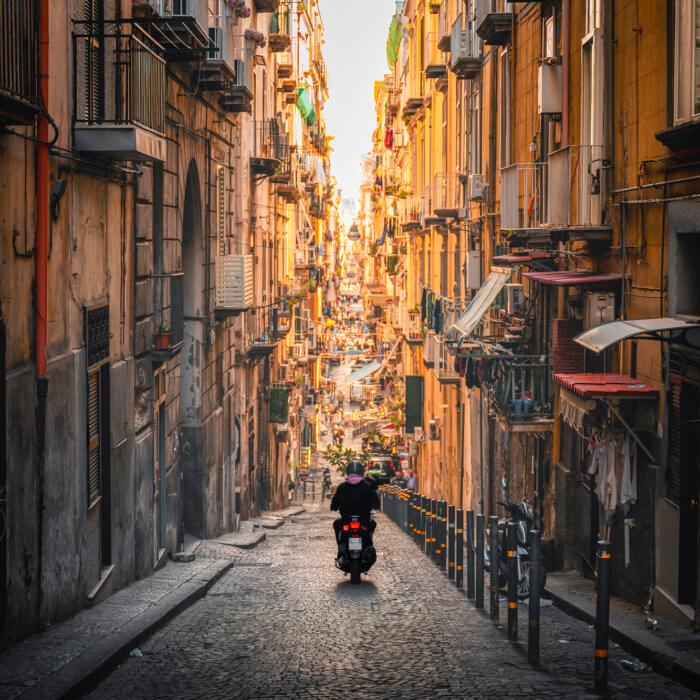
When people picture Holland, they typically see wooden shoes and windmills, fields filled with row upon row of colorful tulips, and networks of little canals fronted by handsome brick homes. But you won’t find many of these things in Rotterdam.
Arrival
When flying there, passengers have a choice. The closest entry point is Rotterdam The Hague Airport. However, this is a relatively small airport, handling mostly low-cost airlines and a very small handful of flag carriers. Those traveling from North America will land at Amsterdam’s Schiphol Airport (AMS). It’s not only the country’s main hub, home to KLM, the famed national airline—it was also Europe’s fourth-busiest airport in 2024.Morning
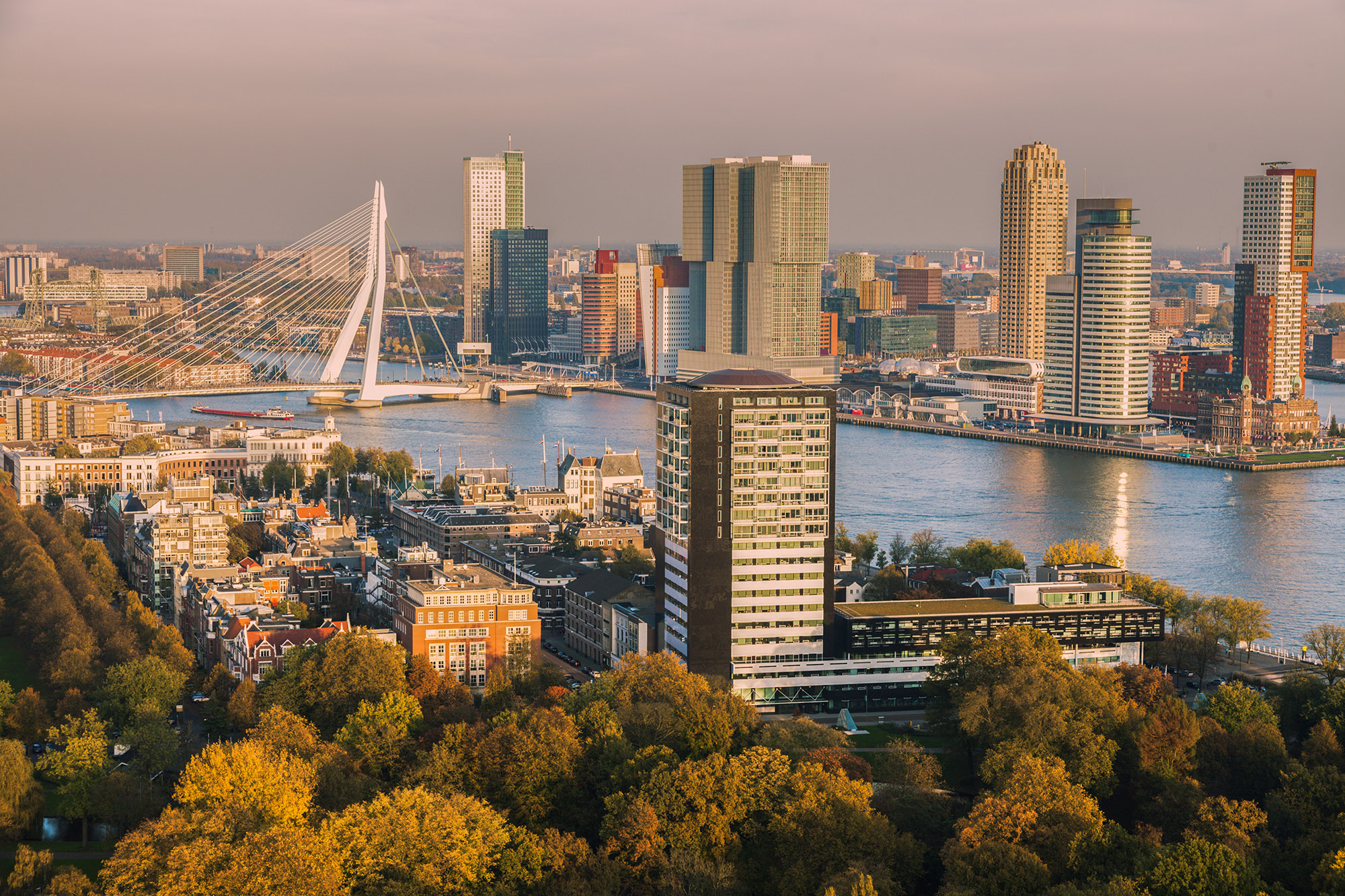
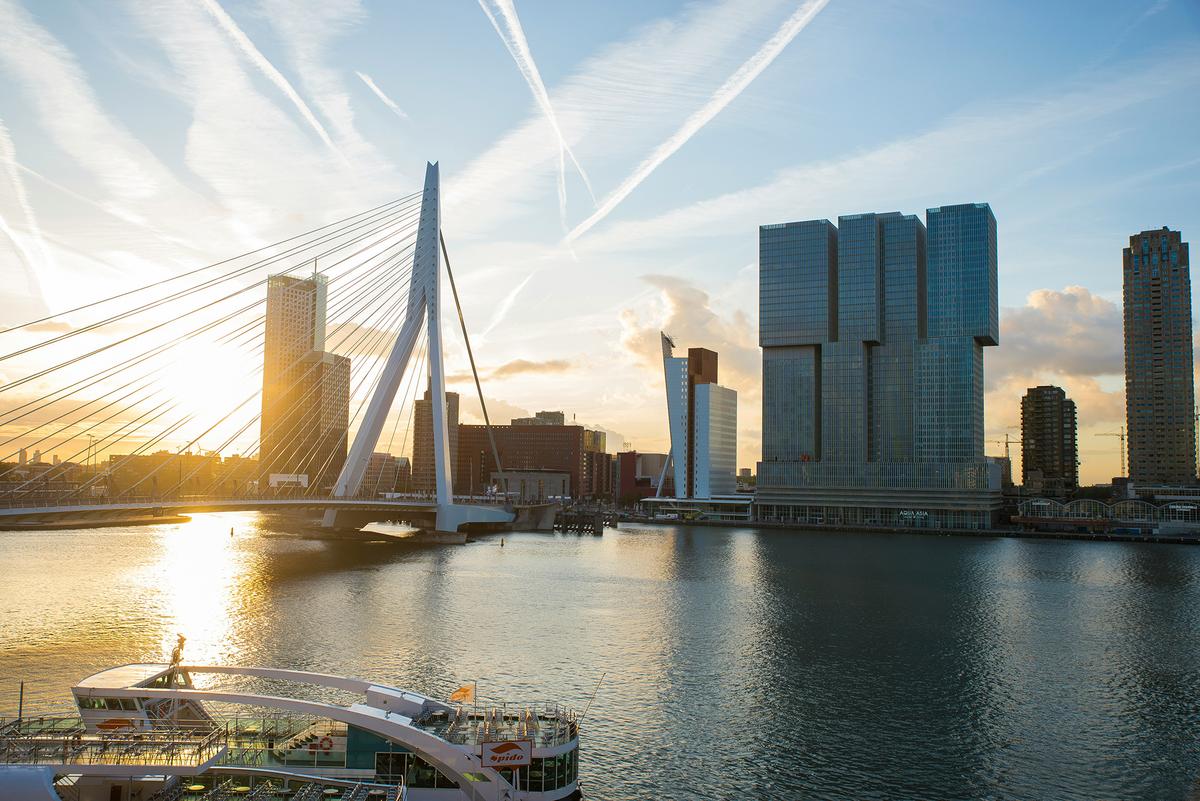
After spending hours in the air, most people are ready for some fresh, salty breezes. So head to the water. The dock for Royal Spido boat tours is only about 10 minutes by road from Centraal. You could take a taxi or Uber, but it’s almost as easy to hop on a bus—ride to Leuvehaven, then walk about five minutes south.When you board the boat, climb straight up to the top, open deck. Spido’s standard 75-minute harbor tour is an excellent introduction to the city—and the largest commercial port in Europe. The boat will cruise past bustling wharves, unloading containers from around the world, and under the Erasmus Bridge. It’s the second-largest in the country, connecting the northern and southern parts of the city. As you roll past the glassy skyscrapers on the skyline, a guide will explain all the things that make Rotterdam so special.
Back on the dry land, this is an excellent time for a walk—the harbor is ringed by all sorts of interesting places. Walk across the bridge to Hotel New York, about 20 minutes on foot. Ask the concierge for a quick tour.
Set at the tip of a peninsula and surrounded on three sides by water, this was once the offices of Holland America Line. The company was founded in 1873 and built these headquarters in 1901. Before they became a cruise ship operator, the line shuttled passengers aboard steamships from here to the United States.

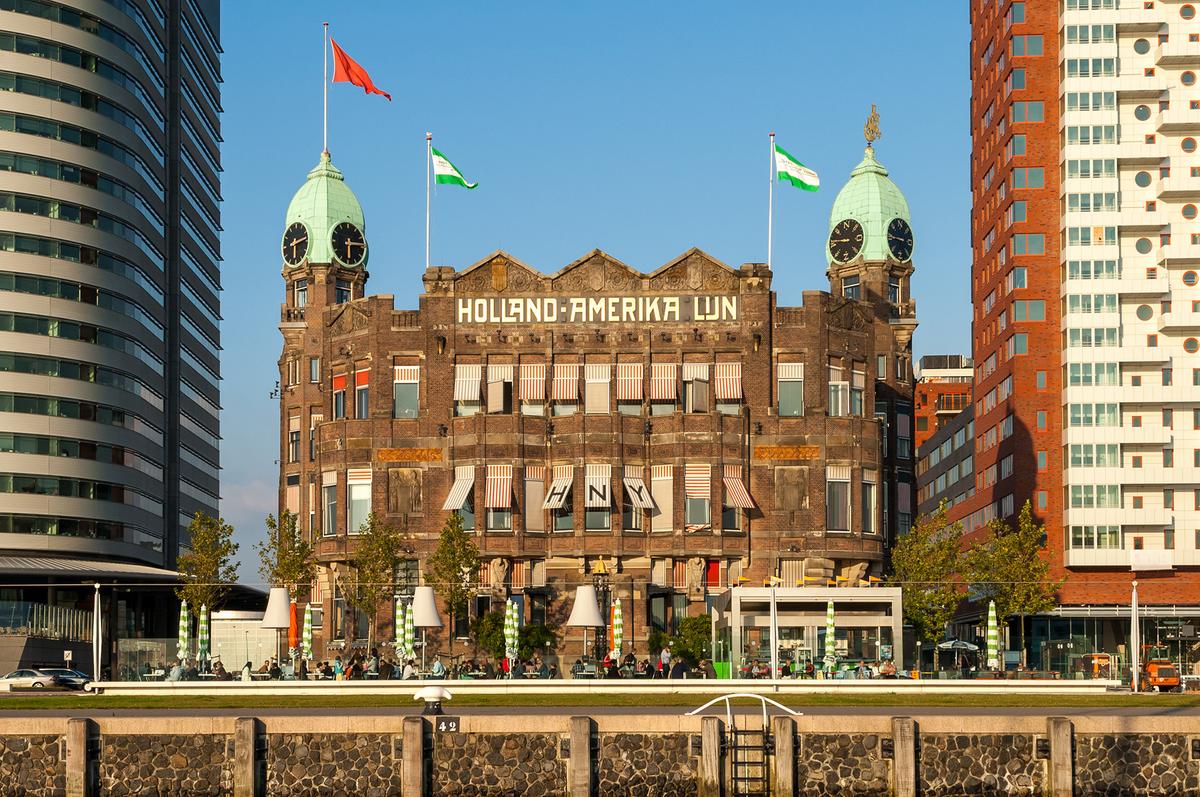
Passengers could also lodge in this beautiful building for a short time before their long voyage across the Atlantic. After 1989, it became derelict and abandoned, occupied by squatters. In 1993, new owners renovated it and converted the former offices into a hotel. It was protected in 2000 as a national heritage site.
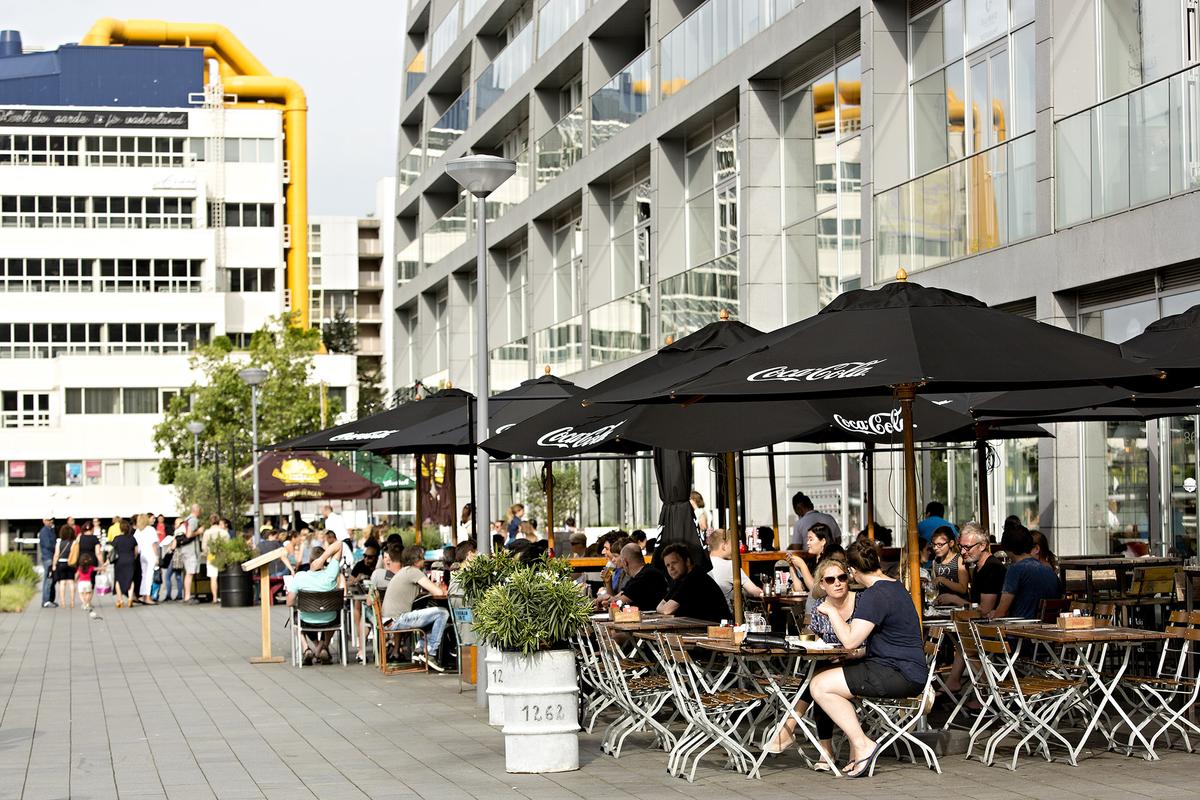
Once you’re finished the tour, stride across the Rijnhavenbrug pedestrian bridge to the Fenix Food Factory for a snack. A former warehouse with a few onsite restaurants, you can grab a sweet treat and a hot coffee at Sophia’s. Then grab a seat at one of the outdoor tables and watch the boats sail by on the harbor.
Afternoon
The surrounding Katendrecht neighborhood (called De Kaap by the locals) is a good place to continue your walk. This was once Rotterdam’s red light district. It’s also set on a peninsula, and today you’ll find parks and bistros and walkways along the Nieuwe Maas and Maashaven waterways.Take in the SS Rotterdam, on the south side. She’s a classic ocean liner that sailed the high seas for 41 years. The ship has since been permanently moored and converted into a hotel. Visitors are welcome—you can grab lunch, dinner, or, again, take a historical tour.
Time for a late lunch. Take a taxi or Uber back across the bridge, up to Markthal, the Market Hall. Depending on traffic, it’s only about a 10-minute trip. Some find it beautiful, others, ugly. But guaranteed—you’ve never, ever seen a building like this.
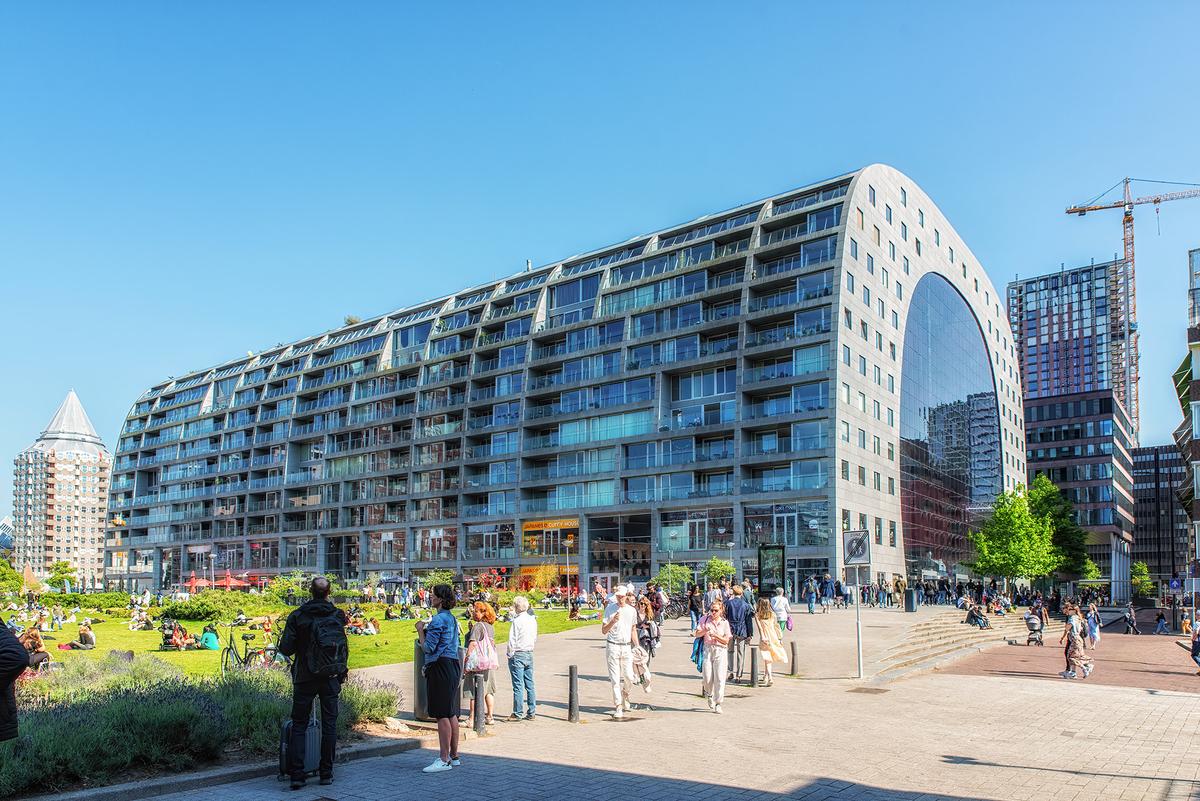
Markthal opened in 2014. Standing on one side, outside, you can see right through it. The façade is pure glass, framed by huge horseshoes. Inside, glance up at the ceiling to see windows from the condominiums built over top, staring down at you.
Before settling on a place for your meal, take a walk around. Almost 100 small food stalls sell all sorts of Dutch and international foods. Sample stroopwafels and sausages and the essential cheese of the Netherlands, Gouda. The seller, if you’re lucky, will teach the proper pronunciation. Not “good-da” but rather “HOW-da.”
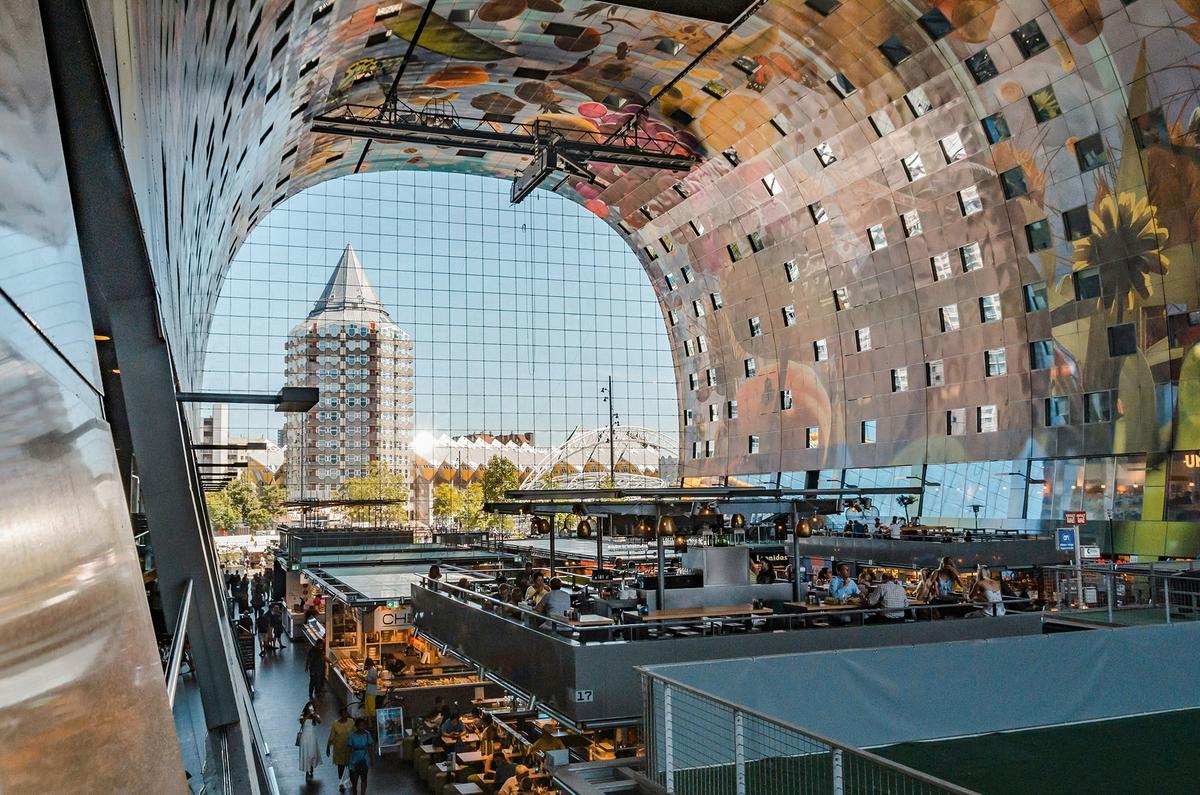
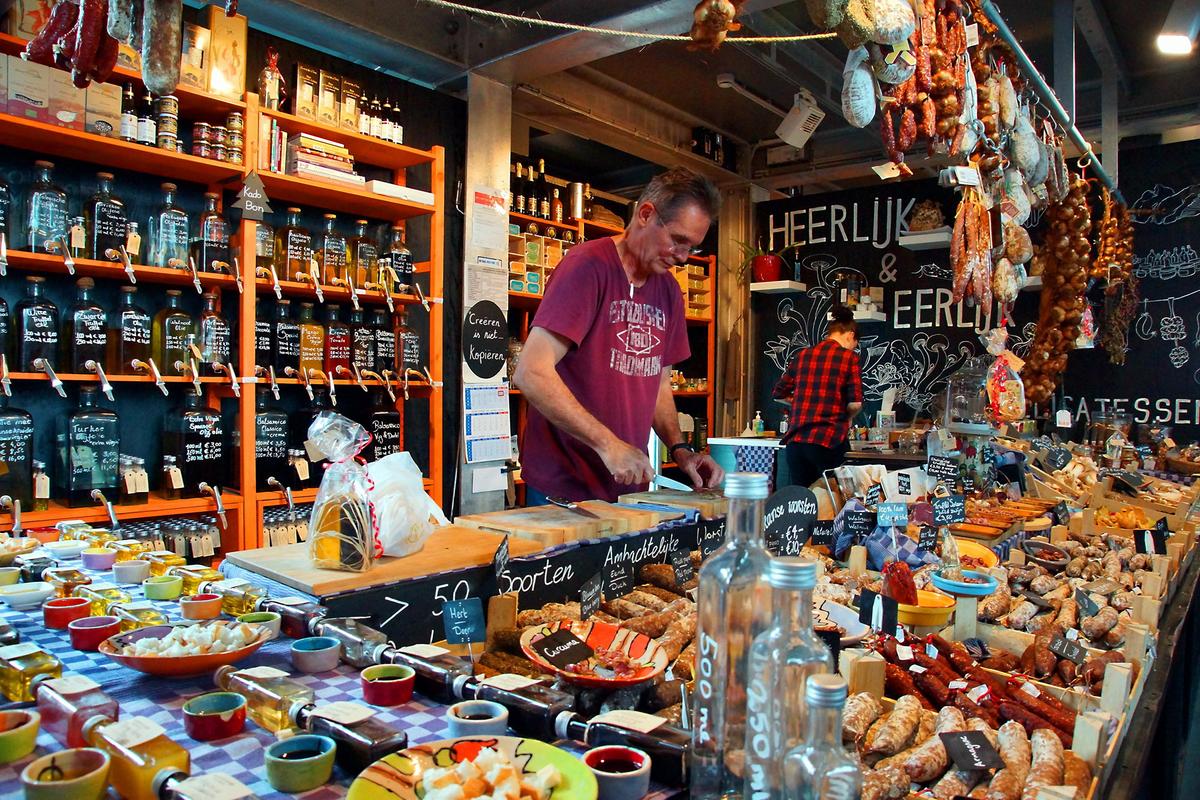
Here, lunch can be a fairly speedy affair. Choose from restaurants serving up everything from Mediterranean to Middle Eastern, as well as local fare. Afterward, it’s only a three-minute walk to one of Rotterdam’s trademark sites.
“Cube houses” in English, the name is much better in Dutch: “Kijk-Kubus.” Elevated squares meant to optimize space, they were designed by Amsterdam architect Piet Blom. For a small admission price (3.5 euros), visitors can tour inside. There, they can decide whether the slanting walls are innovative—or perhaps a bit claustrophobic.
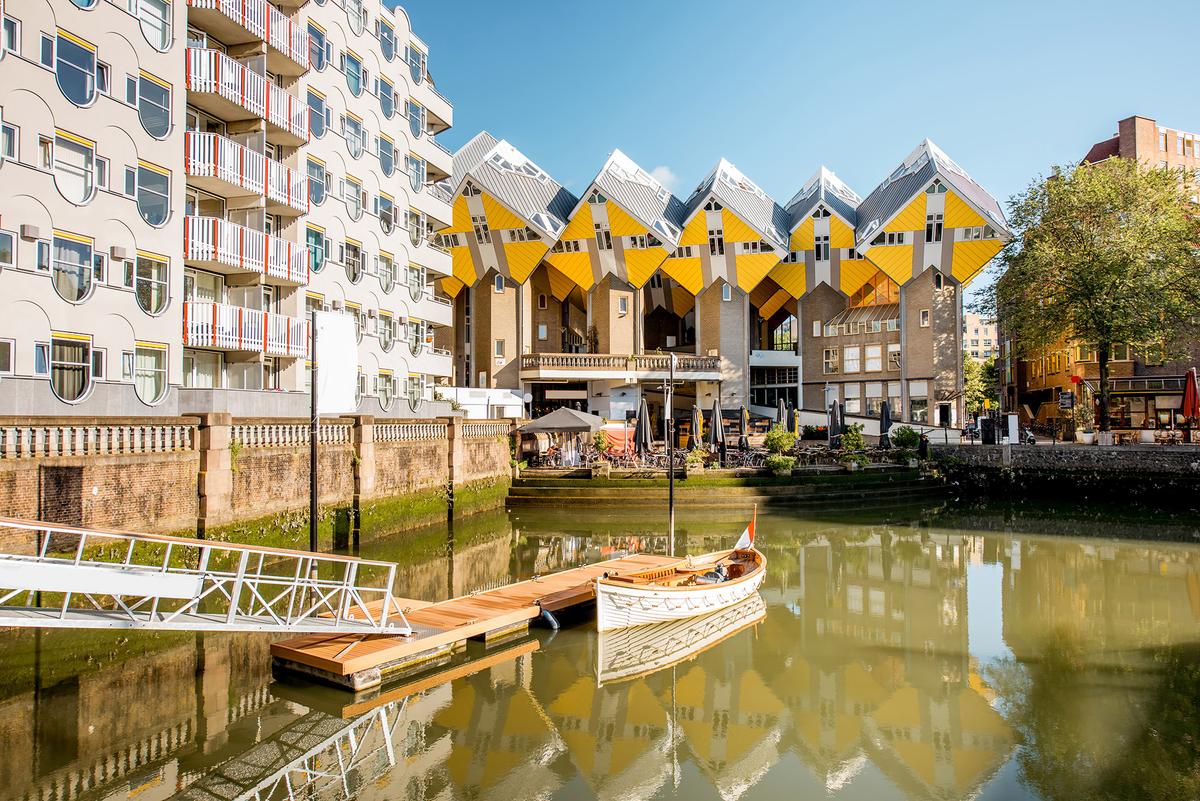
Rotterdam has an excellent public transit system. The ride on the N4 bus shouldn’t take more than 10 minutes. Disembarking, you’ll be delivered right to the doorstep of Sonneveld House.
It’s true: House museums offer special pleasures. The best ones feel like the inhabitants may have been sleeping in the beds and sitting on the couches and eating at the kitchen table, perhaps five minutes ago, just before your arrival to visit. Even when they weren’t inhabited by famous celebrities, these museums engage you in the history of not just the place but the people who lived there.
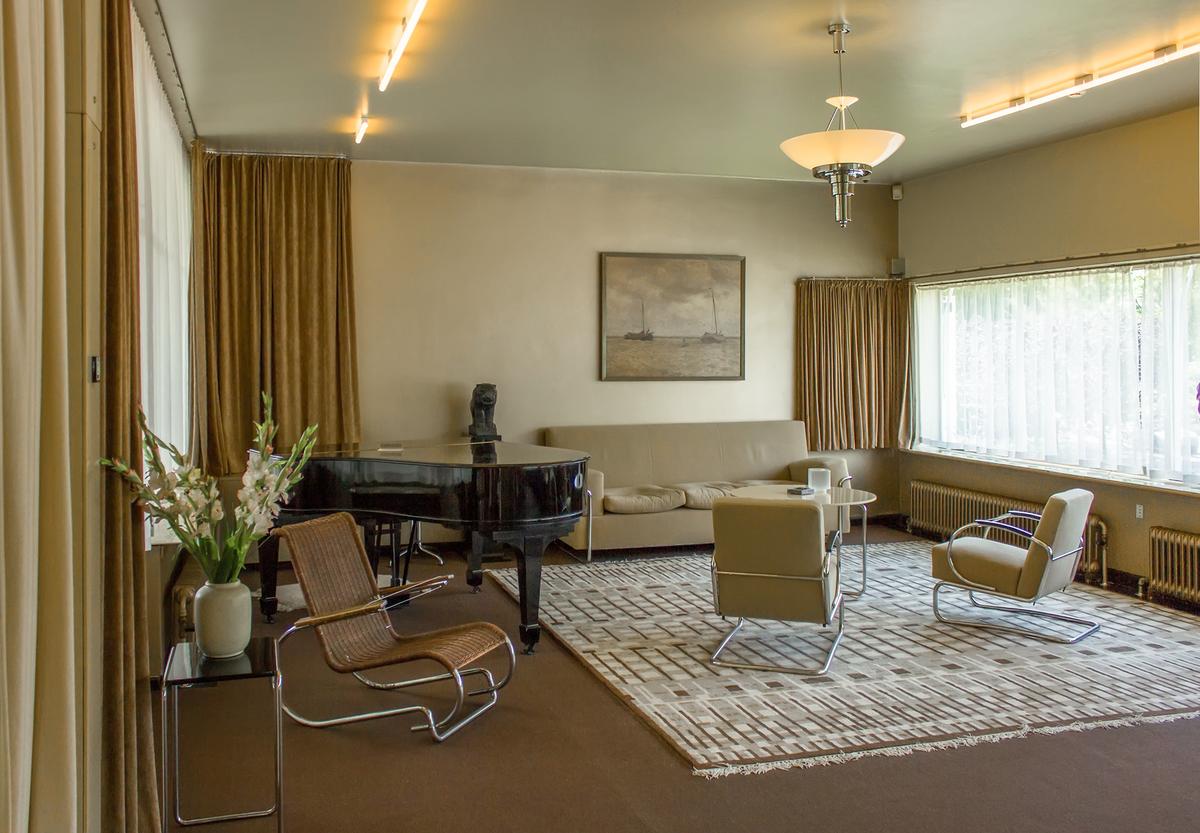
Sonneveld fits that category. It was built for a factory director and his family, who lived there from 1933 until 1955. When they moved out of the Nieuwe Bouwen-style home—a villa on the edge of Museum Park—they left behind almost everything.
Evening
Time to settle in for a nice dinner at Witte de Withstraat, which is less than 10 minutes away on foot. While much of Rotterdam feels like the future, here you get a sense of the past. Witte is a bustling street lined with older brick buildings, crammed with boutiques (some featuring Dutch designers), cafes, bars, and restaurants.The best plan is to take a walk a few blocks up the street and then back. Then choose the restaurant that most appeals to you. There are all sorts of international cuisine—Thai, Indian, Italian, and more.
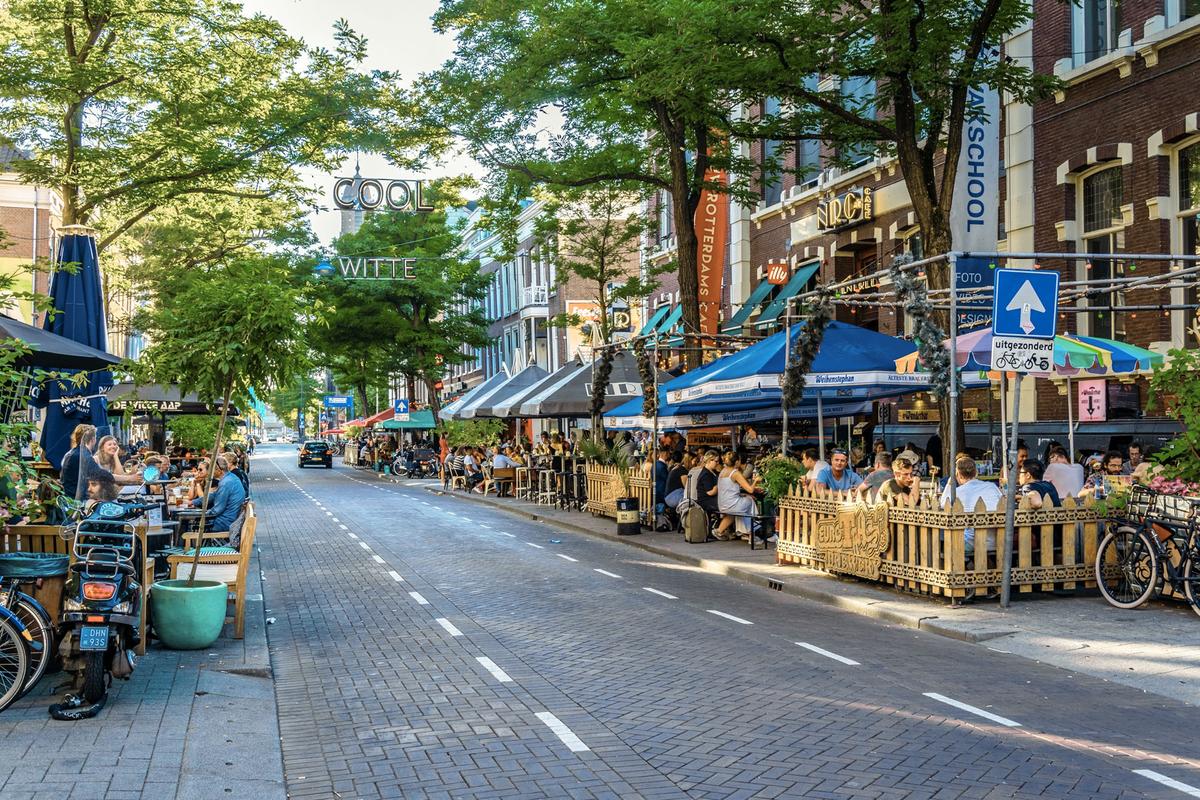
An interesting option is Warung Mini, which serves Surinamese food. Suriname was once a Dutch colony, and many people from this small South American nation have migrated to the Netherlands, bringing their culture and cuisine with them. Tuck into a hearty, steaming meal—perhaps pulled roti chicken with a side of fried plantains.
Then, the night is yours. Head over to the Euromast tower for glittering nighttime views of the city, or catch a performance of the (excellent) Rotterdam Philharmonic Orchestra, if they’re playing. Or just hang around Witte a while longer. Enjoy one more drink and a little live music, too (you’ll have your pick of clubs). A nice, chill way to end a busy day in Holland’s second city.
A Word on Language
Dutch is a difficult language to learn. Fortunately, you won’t have to study much to visit Rotterdam. The Netherlands has one of the highest percentages of non-native English speakers in the world. And Rotterdam—home to a broad array of nationalities—probably outranks most of the rest of the country in this category. But people will appreciate it if you learn a couple words. Perhaps “dankjewel” (thank you) or just “dankje” (thanks).A Day Trip to The Hague and Delft
The Netherlands has a big reputation and a long history—but it is a very small country, with a land area roughly the size of West Virginia. They boast a truly excellent rail system (fast, efficient, safe, and relatively affordable), so you can truly see a lot in a short amount of time.Basing yourself in Rotterdam, the wonders of The Hague are just next door. Serving as home to the royal family and the official seat of the government of the Netherlands, “Den Haag” has a little more than half a million residents. Swing by Noordeinde Palace to see if the king is there—if the flag is raised, he’s in his office. Visit the huge cathedral, Grote Kerk, and Grote Markt, too. And make sure to see “Girl with the Pearl Earring” at the Mauritshuis museum, which is filled with works from Dutch masters Johannes Vermeer and Rembrandt.