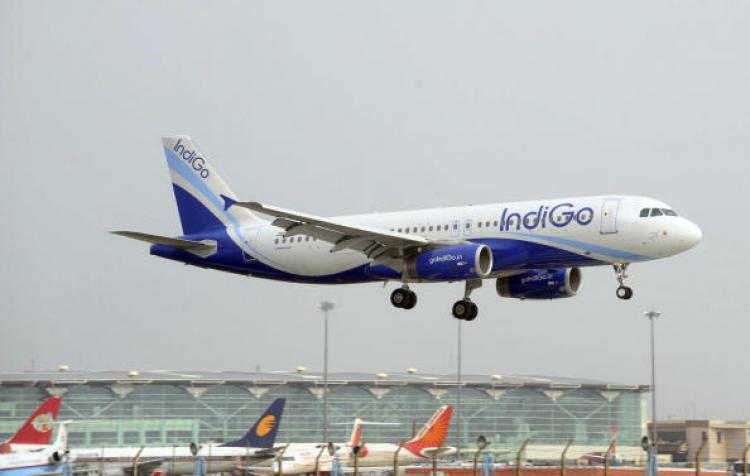
Leading aircraft manufacturer Airbus SAS hopes to stave off competition in the single-aisle jet market with plans to fit its A320 series of passenger planes with optional fuel-efficient engines.
The move would allow airlines ordering A320s and co-variants to choose between new power plants or remain with the original engines that have powered A320 since its inception, according to an anonymous industry source, the France-based company said.
Bloomberg Business said that Airbus wanted to extend the lifespan of the A320, a top seller since it was created in 1988, as the new single-aisle jet was unlikely to be in service before the mid-2020s.
Boeing was also reported to be looking at upgrading its 727’s.
The twin-engine A320 and 737 will carry between 125 to 185 passengers with prices listing between $65 million to $95 million depending on the version and plane range, says Bloomberg.
The decision has been a year in the making with Airbus weighing the consequences of possibly having to take engineers away from finishing-work on the wide-body A350 model projected to be in service by the end of 2013.
The cost of the project was predicted to fall between US$1 billion and US$2 billion said an ABC News source who preferred to remain anonymous until a final decision was announced.
The move aims at deterring new rival, Canadian manufacturer Bombardier, as well as China and Russia, who are competing against Airbus in the 100-plus seater airliner market.
According to ABC News, it is a battle between engine manufacturers for supremacy in a highly lucrative division of the industry.
“It is a necessary and smart move. It is not without risk, but the alternative of doing nothing and being outflanked by competitors is far worse,” Teal Group aerospace consultant Richard Aboulafia told ABC News.
The move would allow airlines ordering A320s and co-variants to choose between new power plants or remain with the original engines that have powered A320 since its inception, according to an anonymous industry source, the France-based company said.
Bloomberg Business said that Airbus wanted to extend the lifespan of the A320, a top seller since it was created in 1988, as the new single-aisle jet was unlikely to be in service before the mid-2020s.
Boeing was also reported to be looking at upgrading its 727’s.
The twin-engine A320 and 737 will carry between 125 to 185 passengers with prices listing between $65 million to $95 million depending on the version and plane range, says Bloomberg.
The decision has been a year in the making with Airbus weighing the consequences of possibly having to take engineers away from finishing-work on the wide-body A350 model projected to be in service by the end of 2013.
The cost of the project was predicted to fall between US$1 billion and US$2 billion said an ABC News source who preferred to remain anonymous until a final decision was announced.
The move aims at deterring new rival, Canadian manufacturer Bombardier, as well as China and Russia, who are competing against Airbus in the 100-plus seater airliner market.
According to ABC News, it is a battle between engine manufacturers for supremacy in a highly lucrative division of the industry.
“It is a necessary and smart move. It is not without risk, but the alternative of doing nothing and being outflanked by competitors is far worse,” Teal Group aerospace consultant Richard Aboulafia told ABC News.