


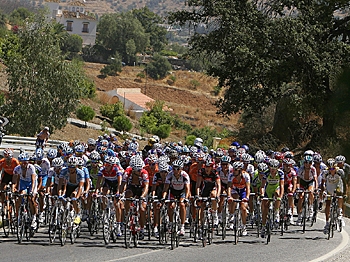
With 10 of 21 stages run, the 2010 Vuelta a España, third of three Grand Tours of the professional cycling season, is heading into the hardest stages.
This year’s Vuelta might be the hardest of season’s Grands Tours, covering 3,353 kilometers (2,083 miles) with 11 mountain stages (the Tour de France had only six) including six punishing mountaintop finishes.
The Grand Tours—the Giro d’Itlia, the Tour de France, and the Vuelta a España, are 21-day races which cover thousands of miles in and around the host nations. A win in a Grand Tour can make a career. Even a stage win can mean more sponsorship, offers from better teams, and higher salaries, not to mention, unequaled prestige.
The Vuelta, coming at the end of the season, challenges riders who have already pounded their way over thousands of miles of road, and climbed countless mountains—“More, more,” it calls to them. “Prove you can do more.”
Answering the call were 198 riders on 22 teams, but crashes, illness, and fatigue have shrunk that number.
This year’s Vuelta might be the hardest of season’s Grands Tours, covering 3,353 kilometers (2,083 miles) with 11 mountain stages (the Tour de France had only six) including six punishing mountaintop finishes.
The Grand Tours—the Giro d’Itlia, the Tour de France, and the Vuelta a España, are 21-day races which cover thousands of miles in and around the host nations. A win in a Grand Tour can make a career. Even a stage win can mean more sponsorship, offers from better teams, and higher salaries, not to mention, unequaled prestige.
The Vuelta, coming at the end of the season, challenges riders who have already pounded their way over thousands of miles of road, and climbed countless mountains—“More, more,” it calls to them. “Prove you can do more.”
Answering the call were 198 riders on 22 teams, but crashes, illness, and fatigue have shrunk that number.


