Subscribe

The Contemporary Realist Movement

By Kara Lysandra Ross Created: December 10, 2011 Last Updated: January 24, 2012
Print E-mail to a friend Give feedback

Max Ginsburg, Foreclosure: "It is unconscionable that people are being evicted from their homes, allowing greed and profits to come before people. I chose to express these realities, not with a metaphor, but head on." (Image courtesy of the artist)

Max Ginsburg, Foreclosure: "It is unconscionable that people are being evicted from their homes, allowing greed and profits to come before people. I chose to express these realities, not with a metaphor, but head on." (Image courtesy of the artist)


The term “contemporary art” has long been associated with the modernist and postmodernist movements because at the time those trends emerged, the words “contemporary art” or “modern art” also meant the art of the day. However, these movements started decades ago, and today the terms have become misleading.

A new movement of living artists is taking back the word “contemporary” and associating it with the traditional techniques of the old masters applied to the human experience as well as important subjects of the times.

The general public is growing tired of art that needs long explanations and justifications. More and more people want to recognize what they are looking at and respond to it on a humanist level rather than a purely conceptual one.

The contemporary realist movement first started as a reaction to the modernists and postmodernists, who still dominate the art market today.

When one can take a found object, put it in a museum and call it art, the general feeling among this growing movement is that the definition of art has become so broad that the word “art,” as defined by the current art establishment, ceases to have meaning.

The modernist movement originated in the early 1900s, and one critic of that time noted, “The avowed purpose of art has been tampered with by introducing the elements of a missing-word composition. … Many friends of art expect that it will meet its fate, but a few champions see a revolution in progress.” [1]

The modernist underdogs quickly took hold of the art world, completely dominating it by the end of the 1940s. After the tragedy of two world wars and the Great Depression, humanity was left with a heart of cynicism and a mind filled with existentialist thoughts, two qualities that modern and postmodern art took to its core.

In reaction to this negative view on humanity and its accomplishments, the contemporary realists felt mankind was best served by depicting through art, the qualities in life that unite us as people, rather than the debasement of civilization.

Nothing says more about a culture than the art it idolizes. Art represents what a culture values, what its people think about, and essentially what they deem worth remembering. Art is the representation of a people, encapsulating their essence on every level.

These artists believe there is more to great art than Marcel Duchamp’s “Fountain,” which is really nothing more than a toilet, or Jackson Pollack’s oeuvre, which is nothing more than splattered paint.

Contemporary realists looked back at the art that pre-dated those global catastrophes, to the old masters, and especially the classical artists of the 19th century, whose works reached their zenith just before the onset of modernism. They are now the progenitors of a renaissance with new themes encapsulating freedom of speech through visual storytelling.

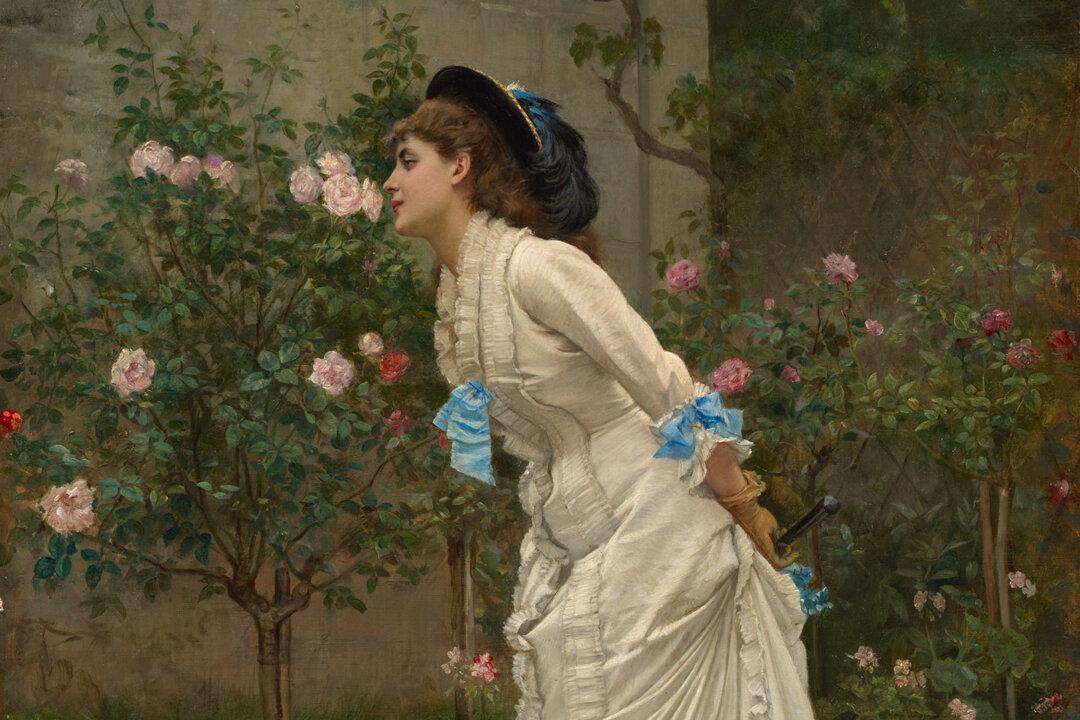
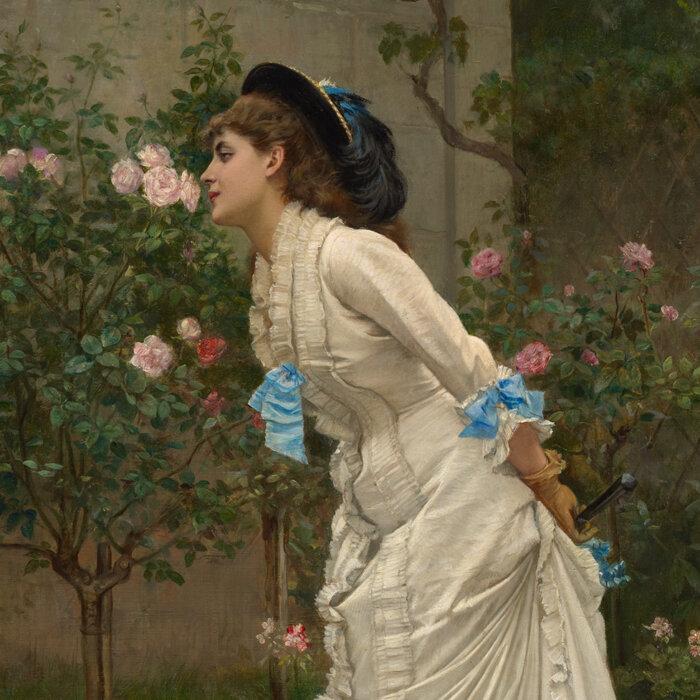
Duffy Sheridan, Promise of Renewal.  (Image courtesy of the artist)

Duffy Sheridan, Promise of Renewal.  (Image courtesy of the artist)

The Internet has become the most important tool for the realist movement. It allowed the movement to gain serious traction about 10 years ago by linking like-minded people together, enabling them to find each other and promote their thoughts to others.

Through groups such as good GoodArt, the Art Renewal Center (A.R.C.) was founded as a center for Realism. It became the largest online museum and the only one at that time dedicated to traditional art.

ARC searched out the remaining few atelier schools that still used the training methods of the old masters. Finding only 14 in existence at that time, with less than 200 students, ARC advertised them to the public.

Since that time, the atelier schools have grown dramatically, with more and more created every year. On the Art Renewal website, 72 atelier schools and workshops are now listed, with many times the number of students, and more are out there that are not listed.

Other alliances have also formed, such as the American Society of Classical Realism, International Guild of Realism, American Society of Portrait Artists, Oil Painters of America, Chinese International Figure Painting, and the California Arts Club, among many others.

Magazines now exist that are dedicated to Realism, such as Fine Art Connoisseur, Plein Air, Artist Advocate, American Arts Quarterly, Art of the West, and others.

Head instructor of the Ani Art Academy Waichulis, Anthony Waichulis, says: “Over the past few years, I have found that applications and program inquiries have increased tenfold. It seems that this ever-growing resurgence in Realism is encouraging new aspiring artists to enthusiastically pursue fundamental skill building on a scale I have not seen before.

“This is truly a wonderful thing, as I believe that effective education is one of the most powerful tools we have to shape the future,” he said.[2]

These groups are all united, figuratively if not literally, in their goal to bring realist painting, drawing, and sculpture back to the forefront of contemporary art

The atelier schools are the foundation of the movement. They are the source of the proper training that is denied in most university and college art curriculums.

For example, when I was getting my bachelor’s degree at Drew University (in New Jersey), which has a reputable arts program, I signed up for a sculpture course. When I got to the class, I learned that it did not involve clay, but it did involve found objects. When I asked what level of sculpture started work with clay, I was told that I would need to take a ceramics course if I wanted to make pots.

As most realist artists know, clay is a foundational tool in learning how to sculpt the human figure, something the college program did not teach. Although this is one example, it is not uncommon, but the norm.

At the Art Renewal Center, letters are received almost daily from artists and art lovers who have reported similar experiences.

Julian Halsby wrote: “I am writing from Britain to say how much I support your movement for the restoration of traditional values in art. There are many of us here in the U.K. who believe that modern art is in many ways a confidence trick and that traditional values must be restored in art schools.

“We have a magazine called The Jackdaw, in which David Lee attacks the Art Establishment. … I write for The Artist magazine and often express views similar to yours.” [3]

James Oliver wrote: “I am an artist who has been disenchanted with the art world to such a degree that I have pursued a science education instead. I think this site is the first real indication that the madness is beginning to clear as humankind rediscovers the beautiful.” [4]

“As an artist and teacher, I believe that the future will only be possible if we infuse the arts back where they always belonged, at the heart of human education,” Jean Corbeil wrote.”[5]

These are only a small taste of the more than 400 letters posted on the ARC website—letters that have come in from all over the world and express similar views and experiences.

Continued: Unlike “normal” art schools, atelier schools focus entirely on representational art …


  • http://www.facebook.com/people/Ryan-Brown/698411111 Ryan Brown

    The Cody Swanson sculpture of “Eve” is not in the Springville Museums of Art’s sculpture garden.  It should be.  It was donated for that purpose.  But because it is such a realistic nude, the Director of the Museum has chosen to stash it in a closet so as to avoid any potential public backlash for showing something that he says is “too nude”.  It has since been moved out of the closet and now resides in The Center for Academic Study & Naturalist Painting, an Atelier two blocks from the Museum that is run by artist Ryan S. Brown.  The Director of the Springville Museum, Vern Swanson,  sits on the Board of the Art Renewal Center and is the author of multiple books on Russian Impressionism, the catalogue raisonne for Alm-Tadema and Godward.  One would think a man like this, who is clearly a proponent of classical ideals in art would be stronger in his stance and more responsible in his role as Director in helping to educate the public about beauty.  Yet he has succumb, not to a negative public reaction, but to the potential negative reaction to a nude by a small minority.  Again, this statue was never shown publicly at the Museum.  His stashing it away is merely in anticipation of a reaction, not the results of complaints.  Since the work has been exhibited at the CAS, and had a chance to finally be viewed by the public, it has had nothing but rave reviews and positive reactions. 

  • http://www.facebook.com/anne.barron1 Anne Barron

    I’m on board with this movement … beautiful paintings by artists who care.  What is wrong with that.  Let’s see an end to the cynical attitude that anything is art if you call it so and if people don’t understand it or relate to it, that makes them phillistines or out of touch with the modern world.  If that’s true, I’m glad to be out of touch …

  • Anonymous

    The realism Movement in America is a sleeper and one which will boom over the coming decade. -Eric Rhoads, Publisher FINE ART CONNOISSEUR

  • gressy1970

    Michael Paraskos Here is my reply to Michel who sent me a copy of the article:

    First, thank you Michel for sending this. It is interesting and I have followed the development of the Atelier schools of art for a number of years.

    But (and it is a very big but) I am not entirely convinced they are the way forward.

    I think the reason for my doubt is embedded in this article. I have long written in my own Epoch Times reviews and other publications that Conceptualism has reached the end of the road, so I can happily agree with that. In fact, not too long ago at an art school in London I was threatened with being thrown out of a window (defenestration I think it is called) for giving a lecture in which I said as much. So I think I can speak as someone who will not be accused of thinking art now is wonderful. Still I feel that the article is a bit scattergun in its approach.

    Attack Duchamp by all means, who was not an artist, as he himself would have agreed. But why Pollock? To attack him sounds like a kind of stylistic snobbery which I cannot go along with. As you yourself say in your reply to Tammi Otis, ‘There is space for all good artists’, not that there is space for all good artists as long as they draw and paint like Ingres.

    Similarly, I am not sure it is true the 20th century was marked by cynicism. If anything it was a bit too gullible, with people all too ready to believe any crack pot figure whether it was in politics, social life or art.

    From my perspective I would also query the attack on existentialism as I would argue, cogently I hope, that a little more existentialist thought in art would be helpful. Conceptualism is anti-existentialist because conceptualism says that we are trapped in this world and there is no other world. It says the artist cannot create new realities. Existentialism on the other hand says the artist can create new realities through an act sheer will. Well, for me, replace the word ‘will’ with the word ‘talent’ and you have an existentialist case for creative art.

    I would agree with the Atelier schools approach to technical training by and large, as I do not really know what an art school is supposed to teach if it is not technical skill. It cannot teach you to be a genius, or even how to come up with a good idea or concept. So technical training seems important. Certainly in my own art school, which is not an Atelier school, we try to do that. But I think we need to be a bit more careful about damning modernity and harking back after a supposed lost golden age. We have to ask why it was lost I suppose.

    What I think would be really good is if one of these Atelier schools organised a symposium to bring together people who have an interest in this area. They might not invite the conceptualists, as they are outside any definition of art, but there would need to be room at an event like that for doubting voices, like myself, or Clive Head, or Alan Pocaro, to say, are we sure this is the right way to go? I wonder if Kara Lysandra Ross would organise something like that?

    I would also be interested in knowing what the photorealists / hyperrealists think of the Atelier schools. They seem like natural allies as they are both figurative and essentially realist, but their attitudes to skill and technique are very different I think.

    Regards
    Michael16 December 2011 at 19:42 · Like ·  3Andrea Eisenberg thank you. i appreciate your writings, particularly your directness – and of course i tend to agree with you…the art students league of new york considers itself an atelier school without” damning modernity or harking back to a lost golden age.” having attended the league for several years, i think the league may be ripe for a symposium of the type you suggest. although i think that they might invite the conceptualists….16 December 2011 at 21:07 · LikeMichel Karavaggeli First of all, thank you Michael for your message about article. As said Voltaire “I do not agree with what you say, but I will defend to the death your right to say it”.

    1) I don’t believe you can be great artist without technical skills, so i believe in hard technical training of Atelier Schools, that is denied in most college and schools of fine arts.

    2) I believe in Contemporary Realism as a reaction to the Modernism and Post-Modernism, who still dominate the art until now. Modern art today is dominated by commercial intentions only. Modern artists today are marketing strategists without any artistical skills (Hirst, koons).

    3) I believe in the visual power of art. I don’t believe that art needs long explanations and justifications.

    Regards,
    Michel Karavaggeli16 December 2011 at 21:42 · LikeMichael Paraskos ‎Andrea, thank you for your comments. 

    I think the problem with inviting overt conceptualists would be that instead of debating the development of art, and the teaching strategies for that, we would end up in a slanging match over whether conceptualism is art. I did a bit of that in the past and got bored with it because it doesn’t lead anywhere. 

    I’d be more interested to listen just to the art side of the story, and where that goes next, rather than what Duchamp called the anti-artists have to say. After all, we’ve been listening to them for the last 30 years or more.16 December 2011 at 22:03 · LikeClive Head I regard the development of Atelier schools in the style that they are described in this article as an understandable backlash to the mainstream, and they may have some value. But first there must be a far more substantial debate about the nature and the development of art. This is a reactionary movement, and there are parallels with the Stuckists and we have to question how valid the outcomes really are. I would raise a number of key issues with this article. Firstly, we need to be more precise about the term contemporary realism. It isn’t a movement and has been used to described artists as diverse as Pearlstein, Welliver, Downes, Close, none of whom would agree with the reactionary anti-modernist stance that is being advocated here. Secondly, within contemporary realism we can find strands of highly conceptualised strategies that are not easy to negotiate. Whatever their merits, contemporary realism is not always humanist and morally upstanding. Thirdly, those artists that are regarded as the leading realist artists tend not to be associated with the Atelier system and do find a place within the mainstream art world, although they may seem, at times out of place. Gertsch, Estes, Lopez-Garcia, the late Freud and Bravo are often looked up to by aspiring realists yet their work is often poorly understood by those that marvel at their achievements. Although I believe that art education has become very poor, I think we have to be careful about entrenching a “back to the past” approach. All art relates to the contemporary and that must extend to its formal construction. 19th Century salon art is of its time and to imitate its appearance would be false. Much as I would acknowledge the value of some of its principles, the common outcome is to represent its appearance, and so much of the painting that is being alluded to in the article is inherently conservative, if not kitsch (and of course Nerdrum concluded that for him, kitsch was the right path). We need therefore to be more thoughtful about the nature of a good art education. It is just too simple to advocate a skill based training as the remedy to conceptualism. At the core of this dilemma is the very truth of art itself. For art is far more difficult and elusive to achieve, and we have to remember that for many, the prescription of the Atelier system was too stifling (Consider Blake’s views on Reynolds). What we must protect is the notion that art is intelligent making. It is not the illustration of concepts, but neither is it the manifestation of craft. To make intelligently, existence must be defined in accordance with the individual and the unique art work. Materials and processes must be malleable to those ends, so the fledgling artist needs to be in an environment that encourages this process, encourages a curiosity into how others have made art, and warns against the accountability of the outcomes to anything outside of the aesthetic construction of art itself. We can teach some methods and materials, and we can encourage students to look and become self-critical. We can point out where their work is dysfunctional and encourage a discipline towards art and the worth of great artists of the past. But there is a limit. Craft is not art and the danger of teaching technique can stop the making of art. Art always questions pre-determined methods, that is what distinguishes it from craft. I fear that the Ateliers produce elegantly trained craftsmen who produce competent paintings. The rise of this “trend” is no different from the proliferation of photorealism in recent years. Known methods are used to realise paintings and there is a resistance to invention because the outcomes are apparently the antidote to Duchampian conceptualism. But actually we are just seeing another version of illustration masquerading as art. We do need to address this trend and the more highly skilled art coming out of the Ateliers, because I think that admist its ranks are potential artists for the future. To make art that is genuinely humanist and accessible is also to make art that is highly intellectual in its material being, mysterious, elitist and quite unlike the art of the past. Ultimately art is neither realist nor abstract, these are both concepts and belong to conceptualism. Art is idealist, it has no shared style, and its idealism is not the moralising advocated here. Teaching based on this understanding is the best way forward.16 December 2011 at 22:05 · Like ·  3Michael Paraskos ‎Andrea why don’t you suggest a symposium to the ASL? I can’t guarantee to attend (finances and all) but it’s a good proposal and the time is probably right.16 December 2011 at 22:28 · LikeAndrea Eisenberg yes, i think i will. i know some faculty who might be interested too. will keep you posted.16 December 2011 at 22:57 · LikeMichael Paraskos Great16 December 2011 at 22:58 · LikeErik Nieminen I still think that these facebook interactions should be cataloged.

    The history of art and the history of art education cannot be ignored. A great number of the finest artists throughout history have been the product of a more rigorous teaching methodology. I believe that it is only due to these hard-earned abilities that these artists were able to break free from what they knew and create new directions for art. It seems that when photography started to be accepted as art, when performance, when conceptual musings became accepted as art… a vicious cycle of degradation began. I thought I would post here as I have gone through an art education system that emphasizes idea over approach. They try to teach ideas, and attempt to teach the form through which these ideas can take shape. Unfortunately most students have no underpinning of technical skills to see a successful result to their experimentations. They are trying to run before they walk. 

    I agree that a renewed emphasis on the “atelier” method could go a long way to improving matters. Alone however, the Atelier schools are essentially spinning their wheels. In their extreme opposition to conceptualism, they have gone and hidden in a cave… and repeatedly preach to the choir. They, along with the conceptualists need to reconsider the base from which they preach. The involvement of the conceptual minded is essential, I believe, as they are the majority. The art schools are by-and-large run by their mentality. I have not spent enough time considering the topic to know how this divide could be peacefully resolved (so nobody gets thrown through any windows!)… but a dialogue between both is the only way. Perhaps, instead of a revolution, an evolution. Orchestrating that, may be as difficult as orchestrating, say, the Second Coming.

    To add a positive note! Someone who studied with me in my university art program recently sent me an email. He is a performance conceptualist, and for the most part regarded most of the painters with thinly-veiled distaste during his time in the program. Anyway, he recently attended an opening and then a lecture in Switzerland dealing with photorealism, and other related styles. He had the opportunity to hear many top painters speak, and met several himself. He was so taken by the whole thing that he sent me an email and a package in the mail (with documents from the show) saying how after speaking with the curator and some artists, he has really got to appreciate this kind of work. I was shocked to hear from him, as we never spoke much at all in the past.

    He is still (as far as I know!) a performance artist… but what I’m saying is, a healthy dialogue may be possible depending on the approach.16 December 2011 at 23:37 · Like

    • http://www.facebook.com/people/Richard-Thomas-Scott/511771769 Richard Thomas Scott

      There’s actually quite a lot more going on than just the atelier schools. 

      Of course, I have a great deal of respect for them, but they only represent groups within the global realist movements today, not the entirety of the movement. They just happen to get more press in the U.S right now.

      For example, the New York Academy of Art and the Pennsylvania Academy of Art do a great job offering traditional skills, art history, and critical theory. They’re producing a wide range of brilliant painters, from people like Vincent Desiderio, Steven Assael, and Will Cotton.

      You also have independent studios that function rather like apprenticeships: Antonio Lopez Garcia has produced a number inventive painters. You have the tradition of the Wyeths, and arguably, Andrew’s most prominent student, Bo Bartlett.There’s the Nerdrum school: not only Odd Nerdrum himself, but a number of his students and those influenced by him such as Adam Miller, Roberto Ferri, Maria Kreyn, Helene Knoop, Jan-Ove Tuv, Agostino Arrivabene, have been making some pretty incredible work which pushes the boundaries of the largely stereotyped “realism” of the American ateliers.


Selected Topics from The Epoch Times

Harvey Frommer on Sports